
If your house or building has a specific tank system, an EPA septic tank inspection is not something to ignore. EPA data shows that 56% of septic tanks failed inspection in 2024. The most common reasons are not minor paperwork issues, but real system problems.
This guide explains what inspections entail, why they are important, and how homeowners can understand the process from the outset.
What is Septic Tank EPA Inspection?
An EPA septic tank inspection is an official check of your domestic wastewater treatment system to ensure it is working safely and not causing pollution. In Ireland, most rural homes are not connected to mains sewers. Instead, wastewater from toilets, sinks, and showers flows into a septic tank or wastewater treatment system, where it should be treated before safely soaking into the ground.
Who Conducts Septic Tank Inspections in Ireland?
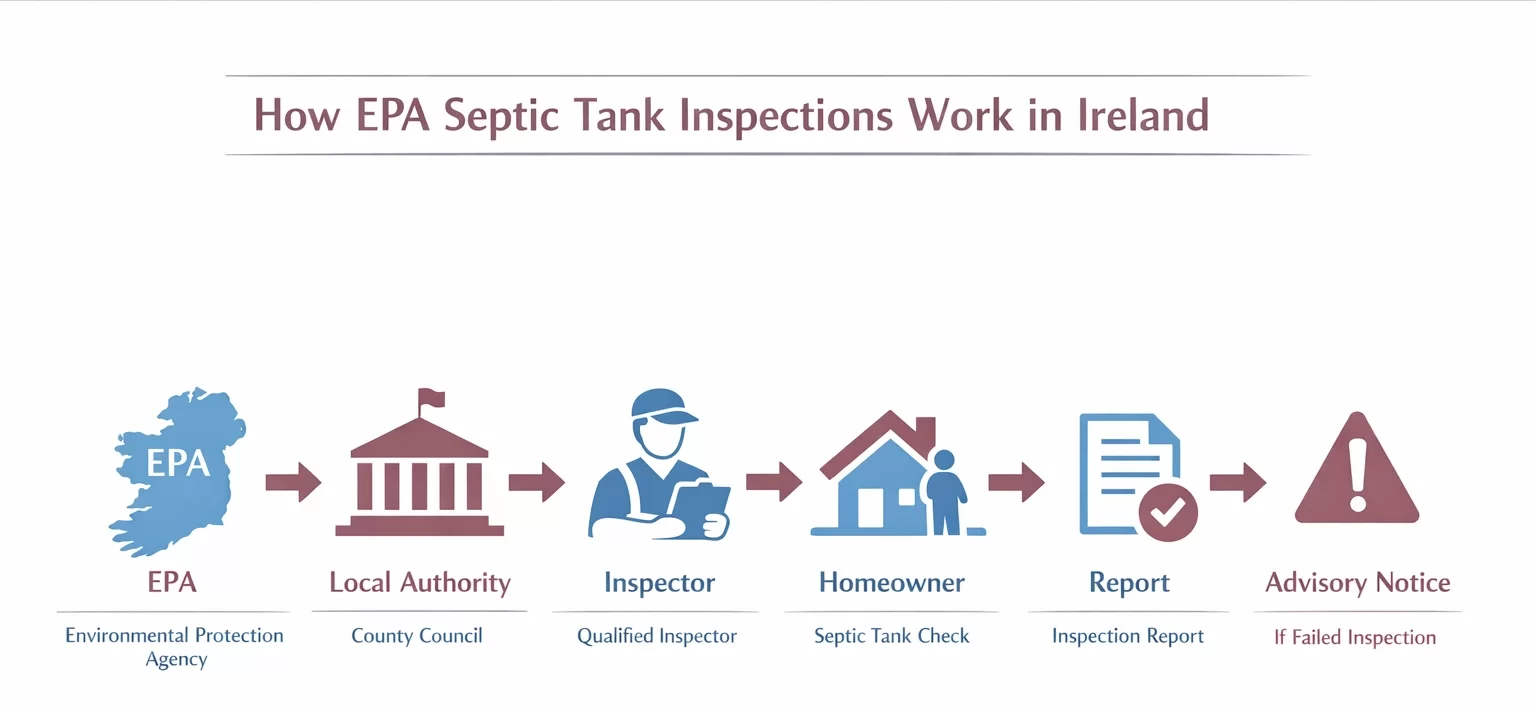
Septic tank inspections are carried out by trained staff from local authorities (City and County Councils). These inspectors are formally appointed and operate under national rules set by the Environmental Protection Agency.
Key points homeowners should know:
- Inspectors are trained specifically in septic tank inspections
- They carry identification and proof of appointment
- They do not enter your house
- Their role is assessment and reporting, not repair work
The EPA oversees the system nationally, while local authorities manage inspections, issue reports, and handle follow-up actions such as advisory notices.
How Often Are Septic Tanks Inspected in Ireland?
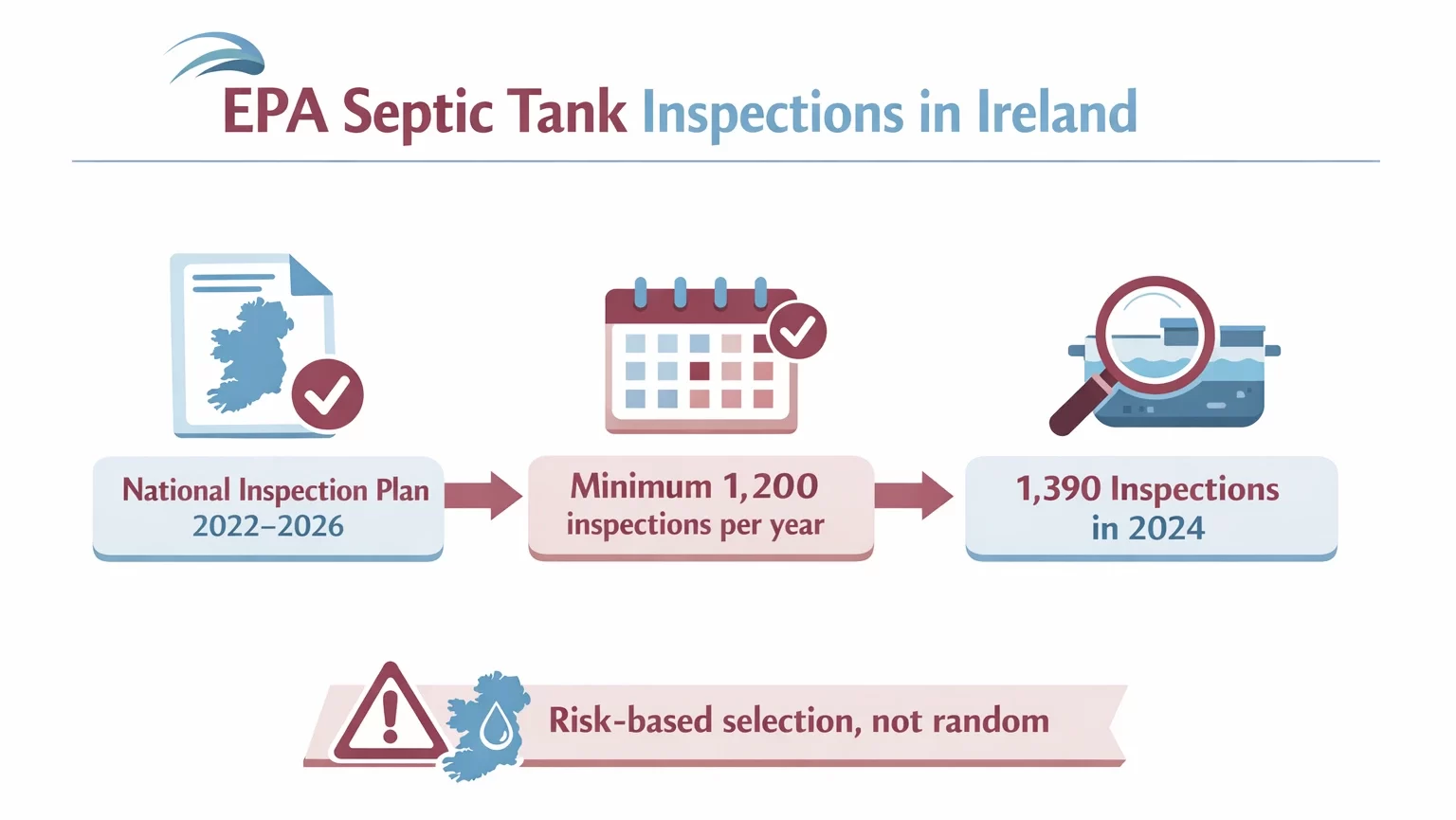
Inspections are organised under the National Inspection Plan 2022–2026. This plan requires local authorities to complete at least 1,200 inspections every year. In 2024 alone, 1,390 systems were inspected.
Inspections are risk-based, not random. Priority is given to:
- Areas near rivers and lakes
- Locations close to household drinking water wells
- Regions with sensitive groundwater
With nearly half a million domestic wastewater treatment systems across Ireland, not every system is inspected regularly, but every system is legally required to comply at all times.
The 10-Point EPA Septic Tank Inspection Checklist (Pass First Time)
System registration status
Your septic tank system must be registered on the national system. Unregistered systems are more likely to be prioritised for inspection and may raise compliance concerns during the visit.
Evidence of proper maintenance
Inspectors look for signs that the system has been maintained. While receipts are helpful, physical condition matters most. Systems that have been regularly de-sludged tend to perform better and fail less often.
Tank structure and integrity
The tank itself must be sound. Cracks, damaged walls, or leaking joints indicate structural failure. A damaged tank allows untreated wastewater to escape before treatment is complete.
Secure access covers and safety
Manhole covers must be secure and safe. Broken or loose covers are a safety risk and a common reason systems are flagged during inspections.
No surface ponding or overflow
There should be no wastewater visible on the ground surface. Ponding is a clear sign that the system is overloaded or failing and poses a serious environmental risk.
Correct effluent discharge method
Wastewater must not be piped directly to drains, ditches, or streams. Direct discharge to surface water is a serious failure and may require immediate corrective action.
Percolation area condition
The percolation area allows treated wastewater to soak safely into the soil. Inspectors check for damage, compaction, vehicle traffic, or signs of failure.
No rainwater entering the system
Rainwater from roofs, yards, or drains must not enter the septic tank. Excess water overwhelms the system and reduces treatment effectiveness.
System capacity vs household usage
Systems are designed for a certain household size. If the number of occupants has increased over time, the system may now be undersized and under strain.
No risk to human health or the environment
Ultimately, inspectors assess whether the system poses any risk to health or the environment. This includes groundwater protection, nearby wells, and surface waters.
Why EPA Septic Tank Inspections Fail (Backed by EPA Findings)
Lack of maintenance and desludging
Systems that are not regularly de-sludged accumulate solids, reducing treatment efficiency and increasing failure risk.
Structural defects and ageing systems
Older tanks may not meet modern standards. Cracks, collapsed walls, and deteriorated pipework are frequent failure points.
Surface ponding and leakage issues
Visible wastewater on land is a clear indicator of system failure and environmental contamination.
Direct discharge to watercourses
Any connection sending wastewater directly to rivers, drains, or streams is considered a serious non-compliance issue.
Percolation area failures
Blocked, compacted, or waterlogged percolation areas prevent proper treatment and soil absorption.
Systems posing risk to human health or the environment
Failures that threaten drinking water supplies or ecosystems are treated with particular urgency by inspectors.
What Inspectors Actually Check During an Inspection
An EPA septic tank inspection follows a clear, standard process. Inspectors are not guessing or giving opinions; they are checking whether your wastewater treatment system meets legal and environmental requirements.
System registration and records
The inspector will confirm whether the system is registered. Registration shows that the system is known to the authorities and included in national water services oversight.
Signs of leakage, overflow, or ponding
They visually inspect the tank and surrounding ground for leaks, overflow, or wastewater ponding. Any visible effluent on the surface is a strong indicator of failure.
Condition of the tank and percolation area
The tank structure, inlet and outlet pipes, and the percolation area are assessed for damage, blockage, or misuse such as vehicle traffic.
Protection of groundwater and nearby wells
Inspectors pay close attention to systems located near private wells. Poorly functioning systems can contaminate drinking water, creating a serious risk to human health.
Safety, access, and environmental impact
Secure access covers, safe inspection points, and the absence of environmental harm are essential. The final judgement focuses on whether the system affects health or the environment.
What to Do Before an EPA Septic Tank Inspection
Preparation is about understanding your system, not attempting repairs yourself.
4–6 weeks before inspection
- Check when the system was last de-sludged
- Walk the site and note any wet ground or odours
- Ensure access points are visible and safe
1–2 weeks before inspection
- Make sure rainwater drains are not connected to the system
- Avoid heavy water usage that could overload the tank
- Keep the percolation area clear of vehicles or storage
What NOT to do before an inspection
- Do not try to disguise ponding or leakage
- Do not redirect pipes temporarily
- Do not ignore obvious warning signs
- Inspections are designed to identify real performance, not appearances.
What Happens During an EPA Septic Tank Inspection
Homeowners receive at least 10 working days’ notice. You do not have to be present, but many choose to attend to understand any issues directly.
During the visit:
- No entry to the house is required
- The inspection is visual and non-invasive
- The inspector records findings and observations
- The visit is typically straightforward and professional.
Inspection Outcomes Explained
After the inspection, the outcome is issued in writing.
- Pass: Confirmation that the system meets requirements
- Fail: An advisory notice is issued
An advisory notice is not a fine. It explains:
- What failed
- Why it failed
- What corrective actions are required
- The timeframe to address the issues
EPA data shows that 82% of failed systems between 2013–2024 were eventually fixed, proving that early action works.
What Happens If Your Septic Tank Fails Inspection?
Failure does not mean immediate penalties. It starts a compliance process.
Key points to understand:
- The local authority monitors progress
- Extensions may be possible where work is underway
- Ongoing failure can lead to enforcement
To support compliance, grant schemes are available. Since 2024, grants of up to €12,000 may be applied for eligible remediation or replacement works. Routine cleaning or desludging is not covered.
Long-Term Septic Tank Maintenance to Avoid Future Failures
EPA findings consistently show that maintained systems fail far less often. Good long-term practices include:
- Regular desludging at appropriate intervals
- Keeping rainwater out of the system
- Watching for early warning signs such as slow drains or odours
- Acting quickly after flooding events
These steps protect your household, nearby water sources, and ensure compliance with water services regulations.
Get Professional Help with Drain Away
When it comes to septic tank inspections in Ireland, local experience matters. Drain Away understands Irish soil conditions, EPA regulations, and common system failures. Our professional septic tank cleaning and maintenance services are tailored to your property, ensuring your system remains compliant, environmentally safe, and fully prepared for any EPA inspection.
Key Takeaways
- Over half of the septic tanks inspected in Ireland fail
- Inspections focus on health and environmental protection
- Failures are usually linked to maintenance and structure
- Advisory notices are fix-focused, not punitive
- Early action reduces cost, stress, and risk
FAQs
Q. Can my septic tank be inspected even if it has never caused problems?
Yes, inspections are risk-based and not dependent on visible problems.
Q. Is desludging required before every inspection?
Not always, but poorly maintained systems fail more often.
Q. Are inspections carried out every year on the same property?
No, selection depends on risk factors and national plans.
Q. Can I appeal an inspection result?
A re-inspection can be requested for a small fee.
Q. Do grants cover routine septic tank cleaning?
Grants apply only to remediation, upgrading, or replacement.