
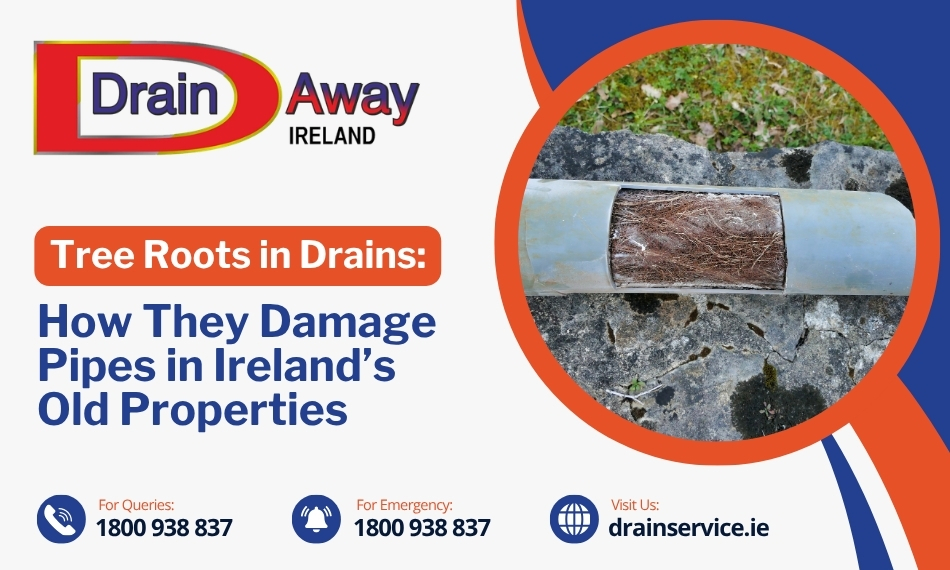
Tree roots in drains are one of the most common hidden causes of blocked and damaged pipework in Ireland’s older properties. Many homeowners only discover the issue after recurring drainage problems.
Why Tree Root Intrusion is a Major Issue in Older Irish Properties
Ireland has a large number of ageing homes built with older drainage materials and surrounded by mature landscaping. This combination makes root intrusion a frequent and costly problem.
Several factors contribute:
i) Ageing housing stock
Many properties were built decades ago using pipe materials that deteriorate over time, creating vulnerabilities.
ii) Presence of mature trees
Established neighbourhoods often contain large trees whose roots naturally expand in search of moisture.
iii) Older drainage systems
Historic installations may include clay or cast iron sewer pipes, which are more prone to cracks and joint separation.
iv) Moist Irish soil conditions
Consistent ground moisture encourages roots to spread extensively underground.
For homeowners, the danger lies in the fact that this process occurs silently beneath floors, gardens, and driveways.
How Tree Roots Enter Drainage Systems
Tree roots do not “break into” pipes aggressively at first. Instead, they exploit weaknesses already present within drainage systems.
Roots are attracted to:
- Water vapour escaping from tiny cracks
- Nutrients inside sewer lines
- Condensation forming around pipe joints
Common entry routes include:
- Hairline fractures in ageing pipes
- Loose joints between pipe sections
- Porous pipe materials like clay
- Deteriorated seals in old connections
Once a root finds an entry point, it continues to grow inside the pipe where moisture and nutrients are abundant. Over time, what begins as a microscopic strand develops into a dense root mass.
How Tree Roots Damage Drain Pipes
After entering the pipe, roots begin affecting both flow performance and structural integrity.
Damage typically occurs in stages:
i) Flow restriction: Roots trap debris, grease, and waste, disrupting the normal flow of water.
ii) Progressive blockage: Accumulated material forms obstructions, leading to slow drainage and backups.
iii) Pipe wall pressure: Expanding roots exert force on pipe interiors, widening cracks.
iv) Joint displacement: Root growth can shift pipe sections, increasing leakage risk.
v) Pipe fracture or collapse: Severe root intrusion may result in full structural failure requiring drain repair.
This damage rarely happens overnight. It develops gradually, which is why early detection is critical.
Why Older Pipes are Especially Vulnerable
Older Irish properties frequently contain pipe materials that are highly susceptible to root damage.
Key vulnerabilities include:
i) Clay pipes: Naturally porous and brittle; prone to cracking with age and ground movement.
ii) Cast iron pipes: Subject to corrosion, thinning walls, and joint deterioration.
iii) Age-related material fatigue: Decades of pressure, temperature variation, and soil movement weaken pipe strength.
iv) Historic installation standards: Older sewer lines may lack modern sealing techniques.
v) Ground settlement: Movement over time creates micro-gaps perfect for root penetration.
Modern PVC pipes are more resistant, yet even they can be affected if joints fail or installations are compromised.
Early Warning Signs of Tree Roots in Drains
Recognising a telltale sign early can prevent extensive damage.
1. Slow Draining Fixtures
If sinks, showers, or toilets empty slower than usual, roots may be restricting pipe diameter. This often appears gradually and worsens over weeks or months, particularly after rain when roots absorb additional moisture.
2. Recurring Blockages
Frequent clogs that return despite cleaning can indicate root intrusion. Unlike standard debris blockages, root-related obstructions tend to reappear because the physical cause remains inside the pipe.
3. Gurgling Noises
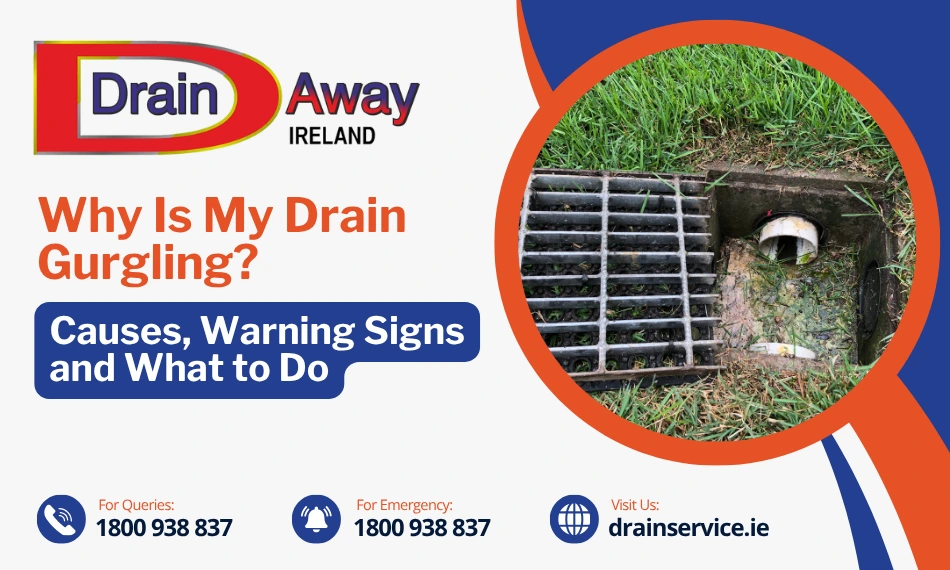
Air trapped by partial root blockages creates bubbling or gurgling sounds. This noise is a common sign of tree root interference affecting normal wastewater movement.
4. Foul Odours from Drains
Persistent foul odours may suggest wastewater stagnation caused by restricted flow. Roots can trap organic matter, leading to unpleasant smells inside or outside the property.
5. Damp Patches or Sinkage Outdoors
Leaks from root-damaged pipes may saturate nearby soil. Unexplained wet areas or minor ground depressions can be a telltale sign of underground pipe compromise.
What Happens If Root Intrusion is Ignored
Ignoring early warning signs allows damage to escalate significantly.
- Consequences may include:
- Complete drain blockages
- Sewage backups into the home
- Pipe cracking and collapse
- Soil washout and subsidence
- Increased drain repair complexity
- Hygiene and contamination risks
Root masses continue expanding. What begins as slow drainage can eventually result in emergency failures, structural damage, and disruptive excavation.
Common Locations Where Root Damage Occurs
Tree root intrusion is not limited to one section of the drainage network.
Typical high-risk areas:
- Underground sewer pipes, especially older clay runs
- Pipe joints & connections, natural weak points
- Lateral drains, linking house to main sewer lines
- Shallow pipe installations, easier for roots to reach
- Areas near mature trees or hedging
Roots follow moisture pathways, not property boundaries. Damage can occur far from the visible tree itself.
Diagnosing Drain Problems Linked to Tree Roots
Professional diagnosis is essential because root damage is invisible externally.
1. CCTV Drain Surveys
Specialist cameras inspect pipe interiors, confirming signs of tree root intrusion, cracks, misalignments, and blockages without excavation.
2. Flow & Performance Testing
Evaluates how wastewater moves through the system, identifying restrictions caused by roots or structural defects.
3. Blockage Pattern Analysis
Recurring issues in the same location often indicate underlying root intrusion rather than surface-level debris problems.
4. Structural Condition Assessment
Determines whether pipes require cleaning, relining, or more extensive drain repair.
5. Differentiating Roots vs Debris
Symptoms may appear similar. Accurate diagnosis prevents ineffective treatments.
Managing Drain Issues Caused by Tree Roots
Management focuses on restoring function and protecting pipe integrity.
Possible approaches include:
- Clearing root-related blockages
- High-pressure water jetting
- Removing debris trapped by roots
- Monitoring pipe condition
- Evaluating long-term repair needs
In some cases, specialists may need to remove the roots mechanically or repair damaged pipe sections. The correct solution depends on severity and pipe condition.
Preventing Drain Problems in Properties with Mature Trees
Preventative care is far less disruptive than emergency repair.
Effective strategies:
- Routine drains inspections
- Periodic maintenance cleaning
- Early response to slow drainage
- CCTV surveys in older homes
- Pipe relining when appropriate
- Responsible landscaping decisions
Prevention does not always mean cutting trees. It often involves maintaining pipe health and identifying vulnerabilities early.
When to Seek Professional Drain Inspection?
If you notice slow drains, recurring blockages, unusual noises, or foul odours, do not ignore them. Drainage problems linked to tree roots worsen progressively. Early inspection helps identify the cause, prevents structural damage, and avoids costly emergency repair work later.
Key Takeaways
- Tree roots are a hidden but common cause of drain damage
- Older pipes are significantly more vulnerable
- Early warning signs should never be dismissed
- Root intrusion worsens over time
- Professional diagnosis is essential
FAQs
Q. How do you get rid of tree roots in drains?
Tree roots are removed using professional equipment like mechanical cutters or high-pressure jetting. Proper inspection is required to prevent pipe damage.
Q. How to stop tree roots from getting into drains?
Preventative measures include regular CCTV inspections, maintaining pipe integrity, sealing cracks, and installing root barriers where necessary around vulnerable drainage lines.
Q. What dissolves tree roots in sewer lines naturally?
There are no truly natural solutions that safely dissolve roots. Chemical treatments exist, but professional assessment is recommended before use.
Q. How much does it cost to remove roots from drains?
Costs vary depending on severity, pipe condition, access difficulty, and repair needs. Accurate pricing requires professional inspection and diagnosis.
Q. How do plumbers get rid of tree roots?
Plumbers use CCTV surveys, mechanical root cutting, and water jetting. Severe cases may require pipe relining or excavation repairs.
Q. Why do plumbers say not to use drain cleaner?
Chemical cleaners may damage pipes, worsen cracks, harm seals, and fail to address underlying problems like root intrusion or structural defects.
Q. What will dissolve tree roots?
Specialised root control chemicals can inhibit growth, but removal usually requires mechanical treatment combined with long-term pipe repair strategies.
Q. What dissolves tree roots in sewer lines reddit?
Online advice often mentions chemicals, but effectiveness varies. Professional inspection ensures safe treatment without risking pipe or environmental damage.
Q. What is the easiest way to remove tree roots?
There is no simple DIY solution. Professional root cutting or jetting is safest to avoid worsening blockages or pipe damage.
Q. How long does it take copper sulphate to dissolve roots?
Copper sulphate slows root growth rather than instantly dissolving roots. Results depend on conditions, requiring careful professional application and monitoring.
Q. What is the best drain cleaner to remove tree roots?
Standard drain cleaners are ineffective for roots. Root intrusion requires specialist mechanical removal and structural assessment for lasting resolution.
Q. How to unclog a sewer line without a snake?
Professional water jetting or inspection-based cleaning methods are alternatives. Correct diagnosis is necessary before selecting an appropriate clearing technique.
Q. How to clean out a sewer line yourself?
Sewer cleaning involves risks and specialised tools. Professional services ensure safe blockage removal without damaging pipes or causing contamination.
Q. What is the best root killer for drains?
Effectiveness depends on pipe type and root severity. Professional guidance is recommended to select safe, appropriate root control treatments.