
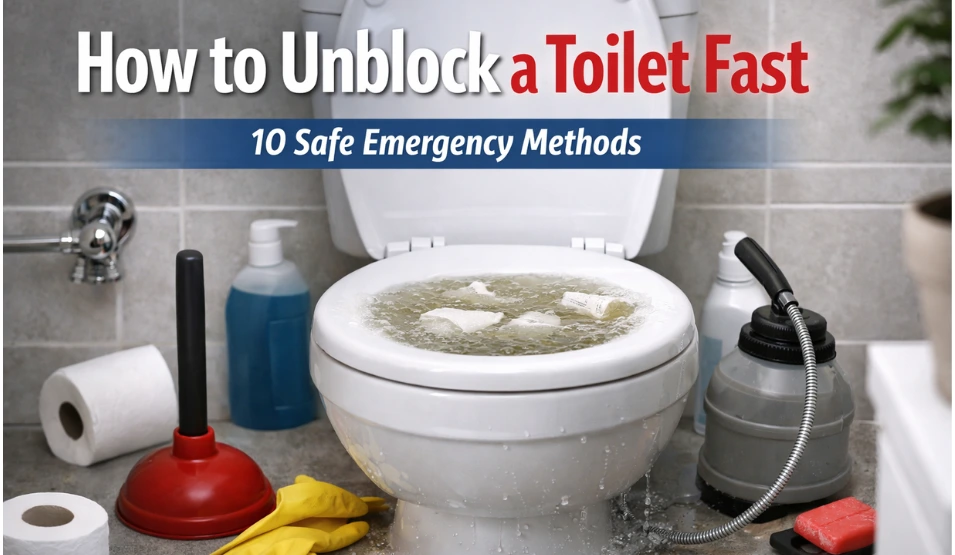
A blocked toilet usually happens without warning, water level rising, panic setting in, and no clear idea of what to do next. In homes, this can be linked to excessive toilet paper, wet wipes, or septic tank systems. This guide explains what works, why it works, and when to stop, clearly and practically.
Quick Emergency Checklist: Before You Try Anything to Unblock Toilet
Before touching anything, do these steps first. They prevent overflow, damage, and hygiene risks.
- Stop flushing immediately. Repeated flushing pushes waste further into the waste pipe.
- Check if the water level is rising or stable. Rising water means stop and act carefully.
- Turn off the toilet isolation valve or the mains water if needed.
- Put on rubber gloves and clear the area, especially of children and pets.
- If needed, remove some water from a bucket and pour it into an external drain.
Identify the Type of Toilet Blockage Before Deciding Technique
Understanding the blockage type saves time and prevents mistakes.
1. Local Toilet Blockage
Only the toilet is affected. Water rises, then drains slowly. Usually caused by excessive toilet paper or waste stuck in the toilet bowl or trap.
2. Partial Blockage
Water drains, but very slowly. The blockage is forming but not complete. This is the best stage to act before it becomes worse.
3. Solid Object Blockage
Plastic, cotton balls, wipes, or foreign objects stuck near the bowl. Water may not move at all.
4. Waste Pipe or Drain Issue
Gurgling sounds, bad smells, or water backing up elsewhere. This is not just a toilet issue.
5. Septic Tank–Related Issue
Repeated toilet blockages, sewage smell, or slow drainage across the house. DIY methods can make this worse.
1. Use Hot Water + Washing-Up Liquid – When Toilet Is Blocked with Poop or Toilet Paper
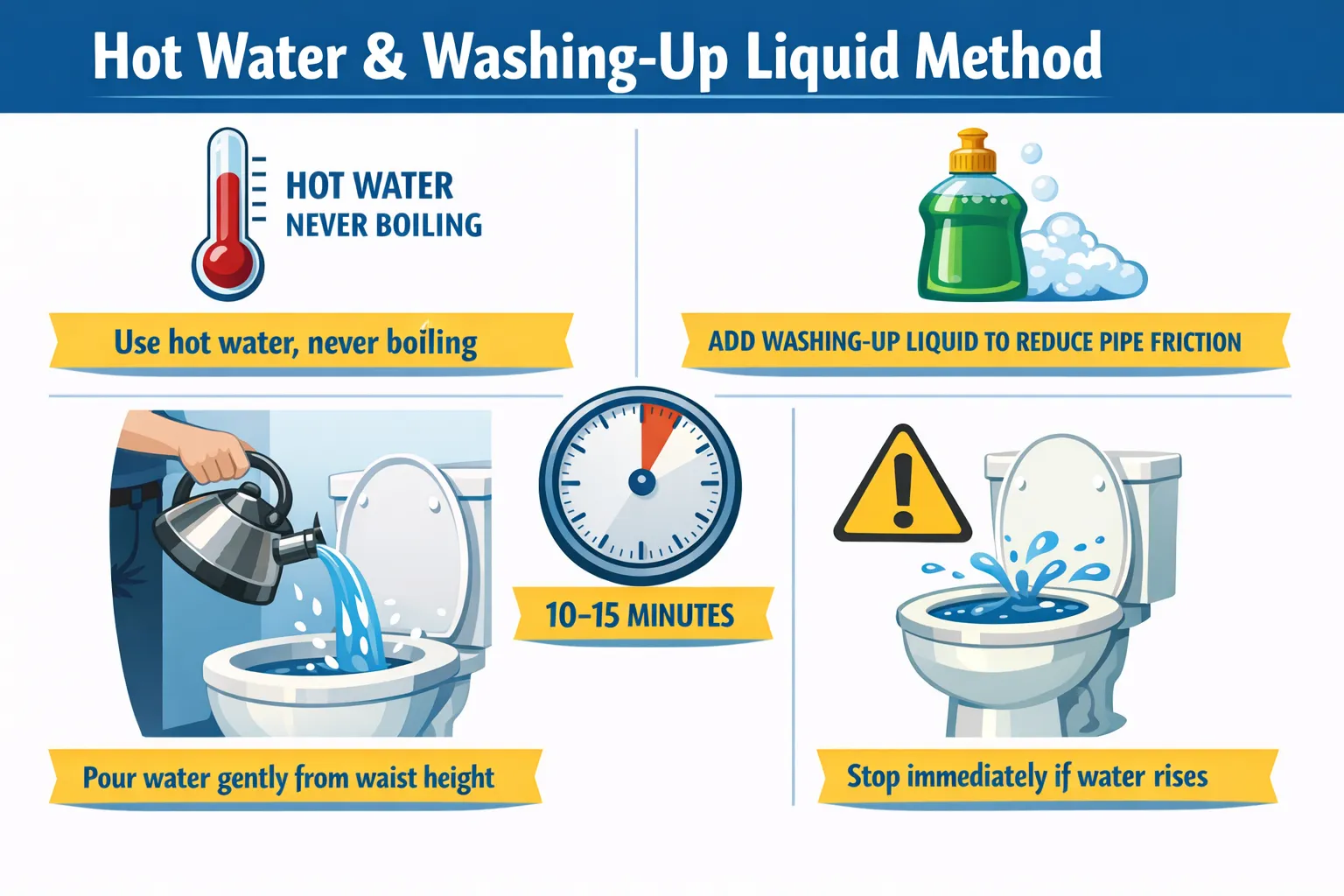
This is the first and safest method for most clogged toilet situations in Ireland.
Hot water softens waste, and washing-up liquid reduces friction inside the pipe, allowing waste to slide through naturally. This works well when the blockage is caused by excessive toilet paper or organic waste.
How to do it properly:
- Heat water until hot, not boiling water (boiling water can crack porcelain).
- Add a generous amount of washing-up liquid into the toilet bowl.
- Pour the hot water from waist height to create pressure without splashing.
- Wait 10–15 minutes before attempting a flush.
Important notes:
- Do not flush immediately. Let gravity do the work.
- If the water level rises, stop and do not repeat.
- Safe for septic tank systems when done gently.
2. Use a Toilet Plunger – When the Bowl Is Full and Draining Slowly
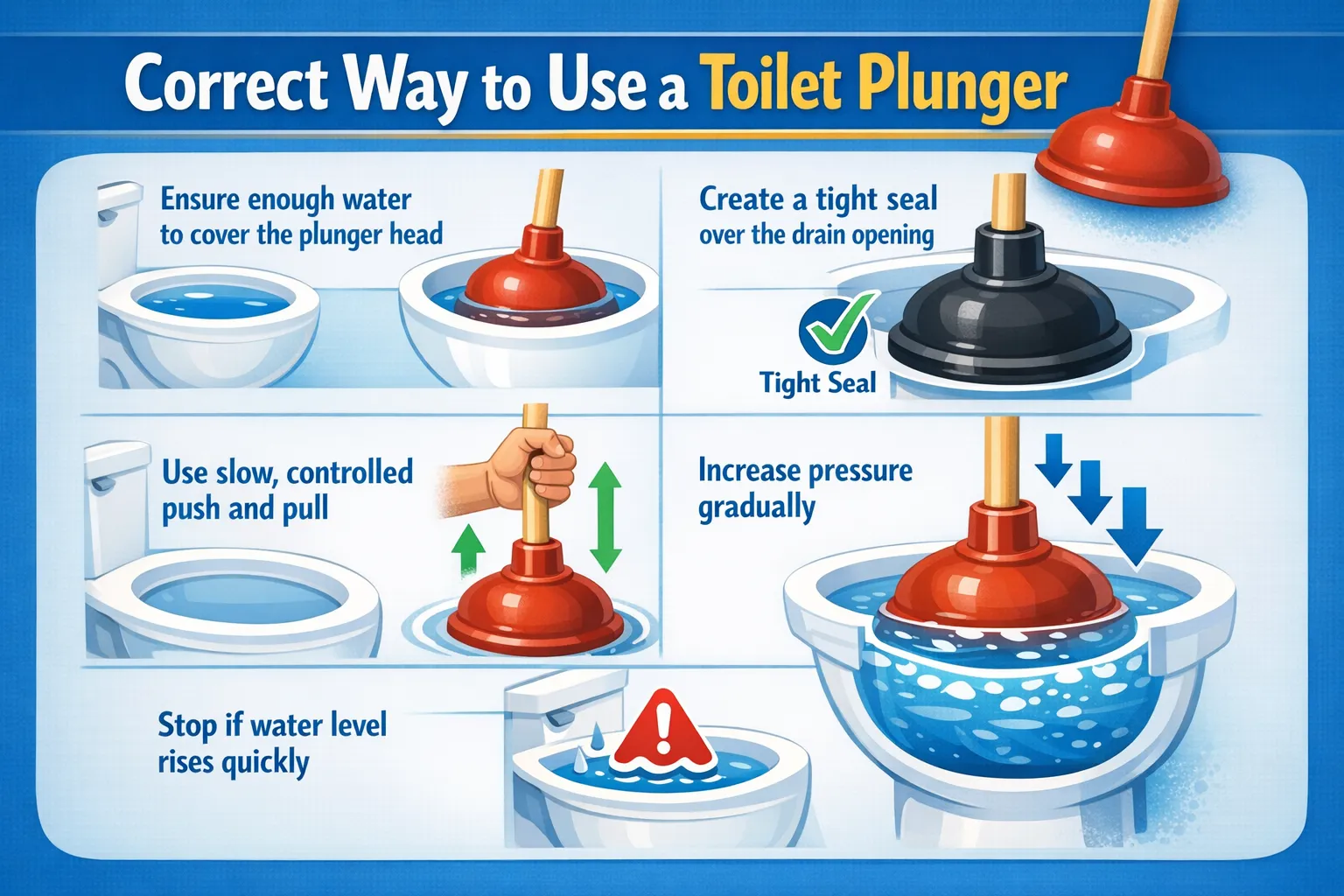
A plunger works by creating pressure and suction, not brute force. Used incorrectly, it pushes the blockage deeper.
Best conditions to use a plunger:
- The toilet bowl has enough water to cover the plunger head.
- Blockage is soft, not solid plastic or objects.
Correct technique:
Ensure a tight seal over the drain opening.
Start gently, then increase pressure gradually.
- Push and pull steadily, not aggressively.
- Stop if the water level starts rising fast.
Most failed plunging happens because people rush. Slow, controlled pressure is what clears toilet blockages safely.
3. Use Baking Soda + Vinegar – When the Blockage Is Mild and Organic
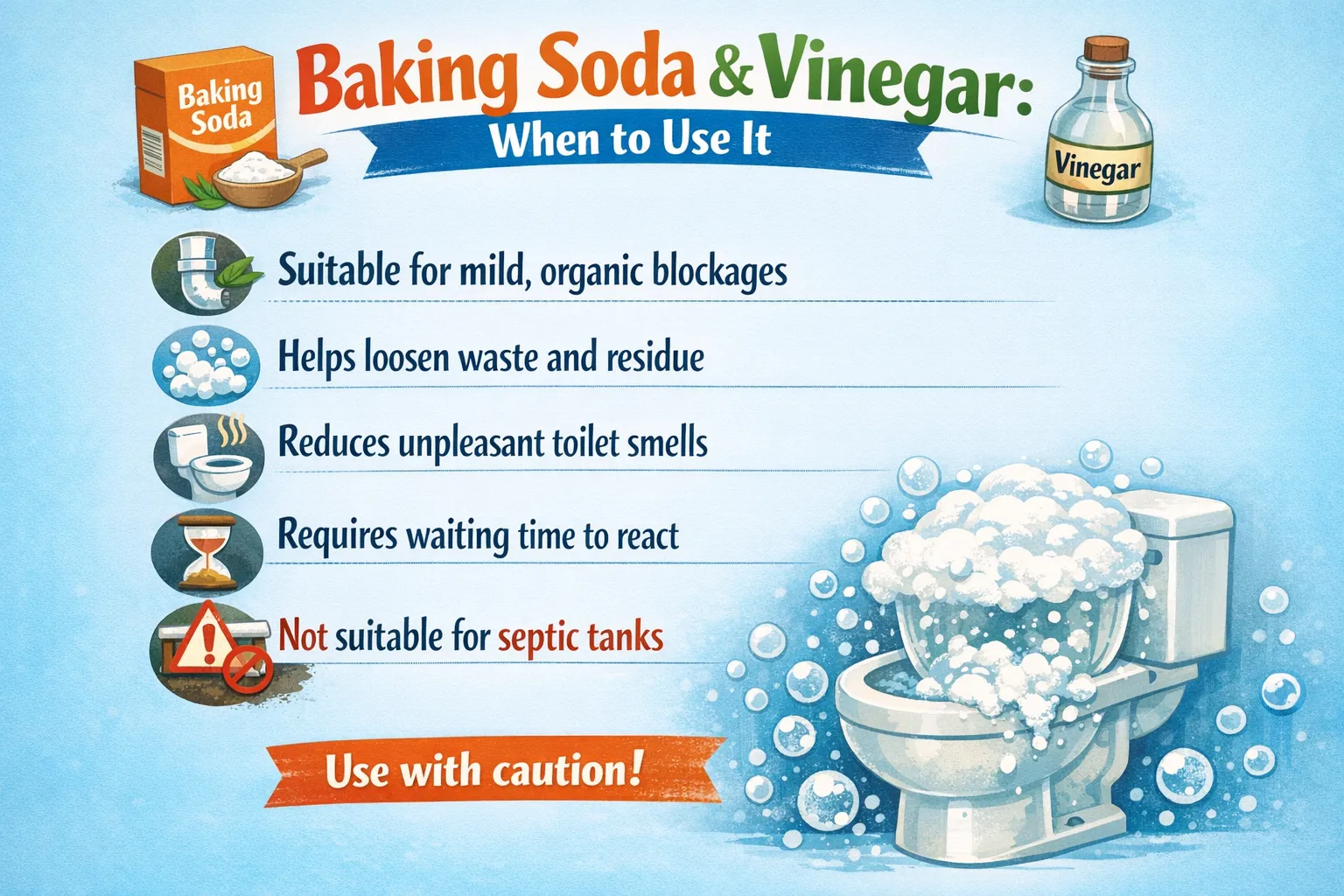
This method relies on a chemical reaction to loosen organic material.
When it works:
- Mildly clogged toilet
- Smelly buildup
- Early-stage blockages
How to use:
- Pour baking soda into the toilet bowl.
- Add vinegar slowly and close the lid.
- Let it react for at least 30 minutes.
- Follow with hot (not boiling) water.
Warning: Do not use this method if your home has a septic tank. The reaction can disturb septic bacteria balance and cause future problems.
4. Use a Toilet Auger (Closet Snake) – When the Blockage Is Deep or Compact
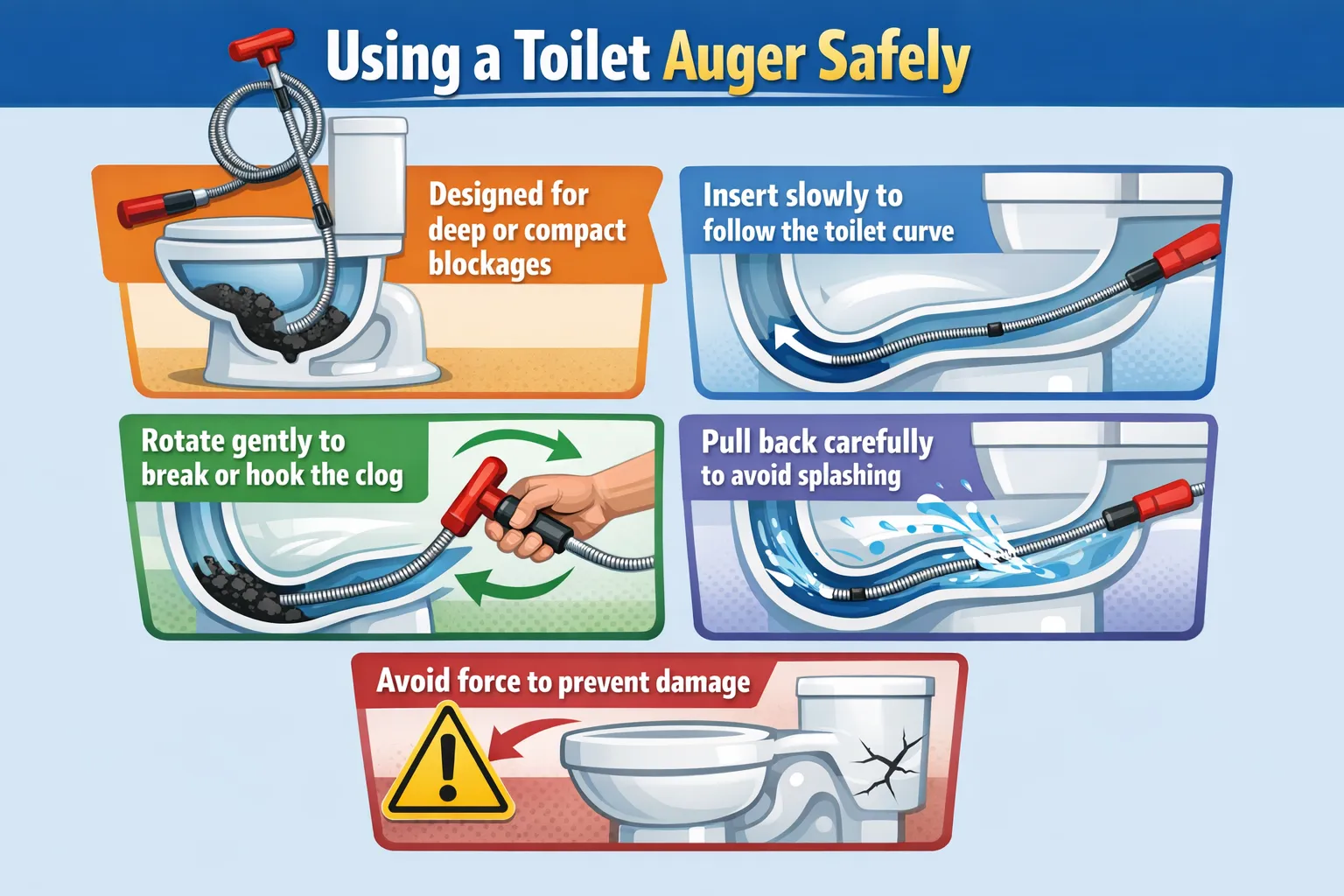
A toilet auger is designed to navigate the curve of the toilet without damaging it.
Use this when:
- The plunger and hot water failed
- Blockage feels solid
- Waste is compacted deeper in the pipe
Practical guidance:
- Insert slowly into the toilet bowl.
- Rotate gently to break or hook the blockage.
- Pull back carefully to avoid splashing.
Forcing an auger can crack seals or damage the trap; this is where experience matters.
5. Use a Wire Coat Hanger – When Plastic or Wipes Are Stuck Near the Bowl
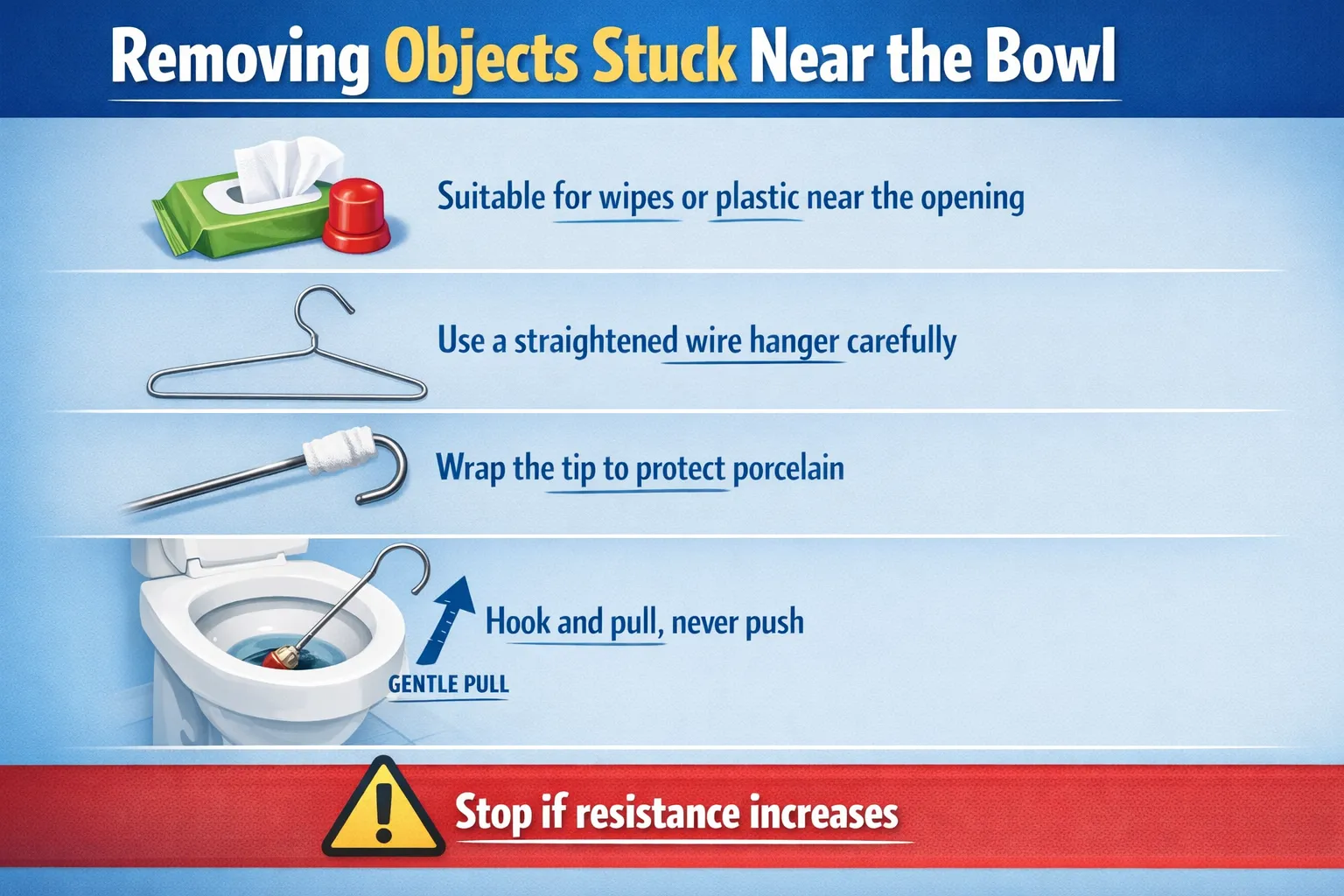
This is a last-resort method for visible obstructions.
Works for:
- Wet wipes
- Plastic wrappers
- Cotton balls near the bowl opening
How to do it safely:
- Straighten the hanger and cover the tip with a cloth.
- Insert gently and try to hook the object.
- Never push hard; removal is the goal, not force.
6. Use Enzyme-Based Cleaner – When Blockages Keep Coming Back (Septic-Safe)
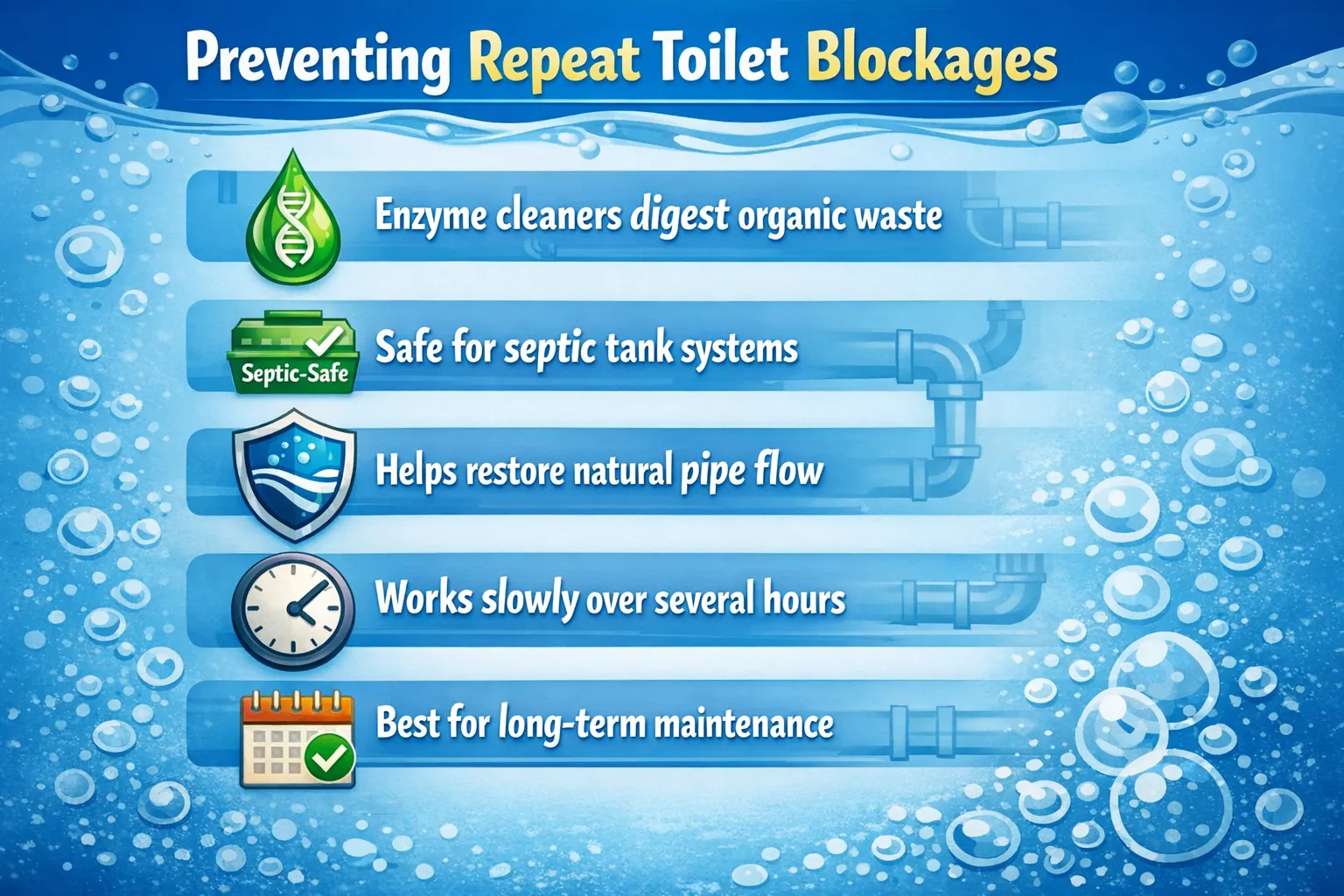
Enzyme cleaners digest organic waste instead of forcing it through.
Best use cases:
- Repeated toilet blockages
- Septic tank homes
- Preventive maintenance
How it works:
Enzymes break down waste slowly over hours, restoring natural flow without harming pipes or septic systems.
This is not an emergency fix, but excellent for long-term prevention.
7. Use a Wet/Dry Vacuum – When You Need to Remove Water Fast
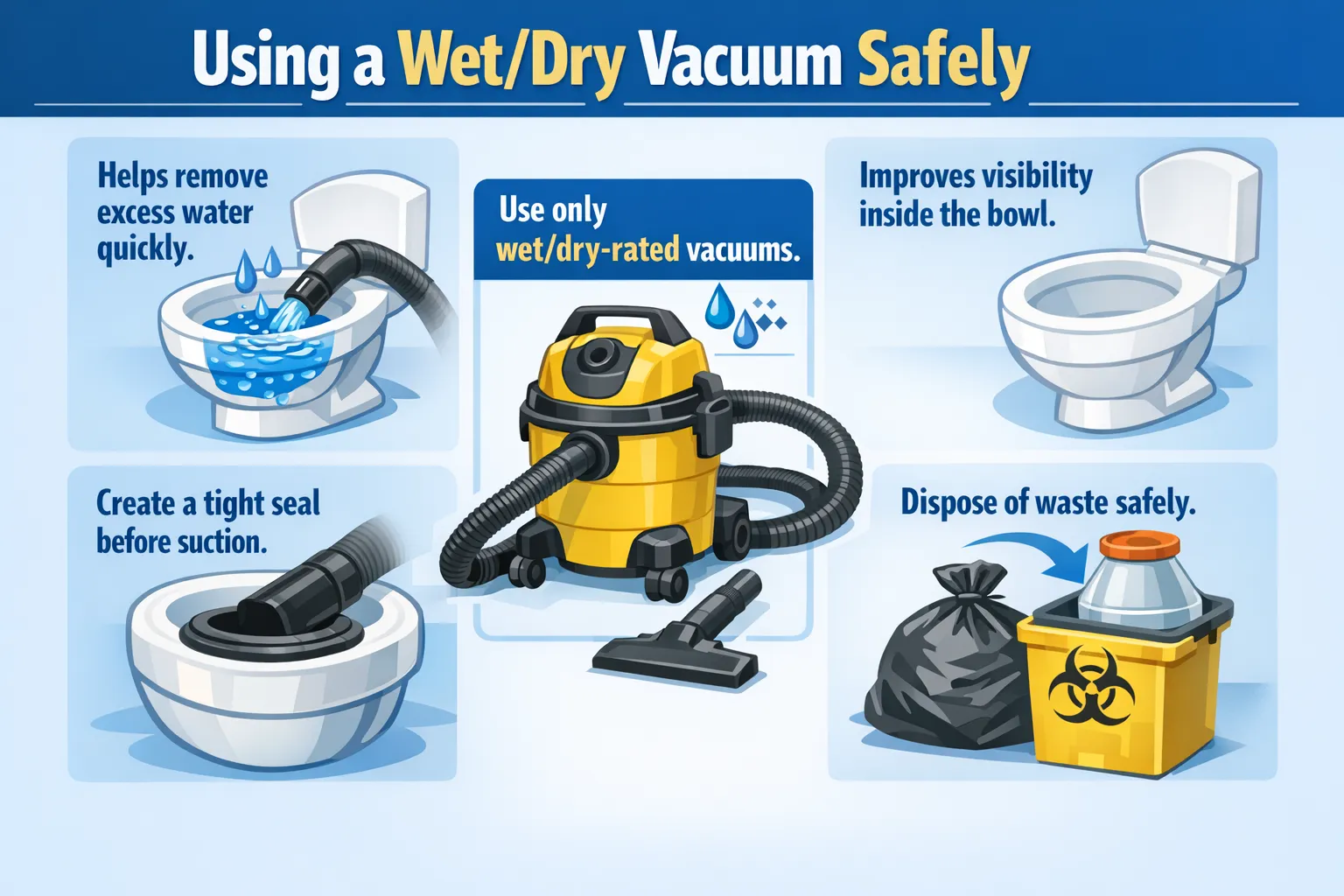
This method is about control, not clearing the blockage directly.
Use when:
- Water is close to overflowing
- You need visibility inside the bowl
Key safety points:
- Only use a wet/dry vacuum
- Create a tight seal
- Dispose of waste safely
8. Use Pressure-Assisted Flushing – When the Toilet Is Partially Blocked
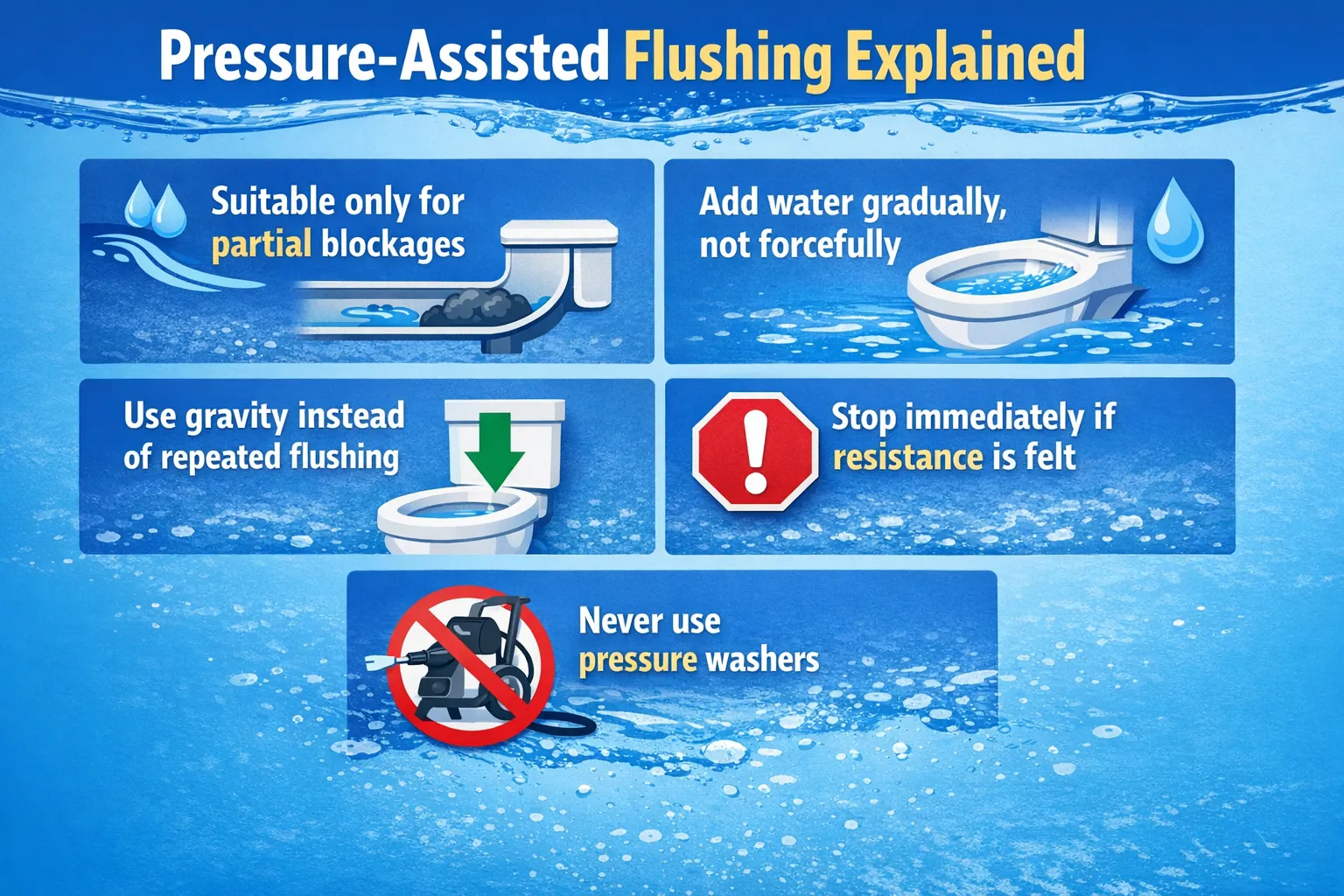
This method relies on controlled water force.
How it works:
- Add water gradually to the bowl
- Use gravity, not repeated flushing
- Stop immediately if resistance is felt
Never use pressure washers inside a toilet. This causes pipe damage and seal failure.
9. Use the Cling Film Method – When You Have No Tools at All
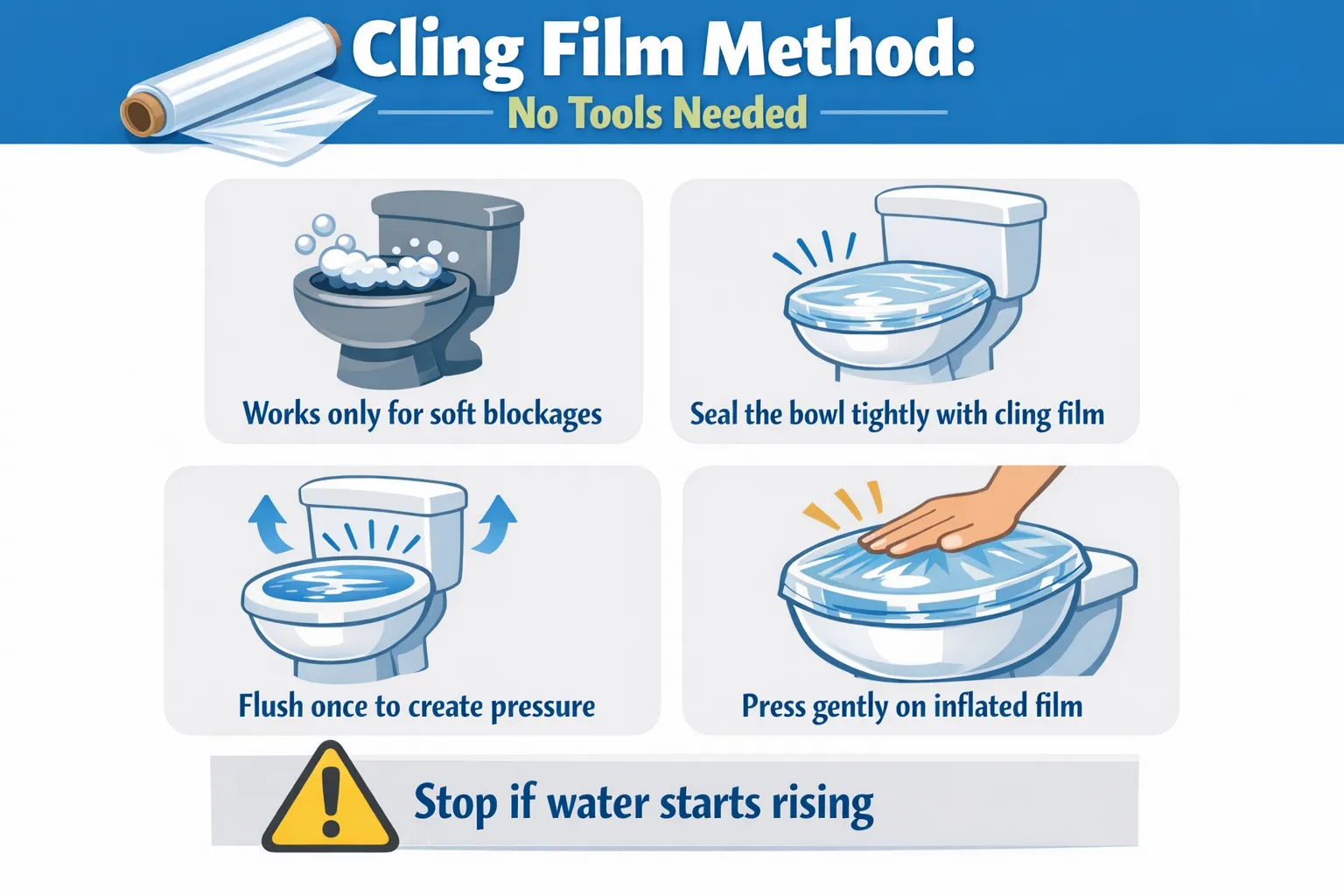
This creates temporary pressure using air resistance.
Steps:
- Cover the bowl tightly with cling film
- Flush once
- Press gently on the inflated film
Only works for soft blockages.
Stop immediately if water rises.
10. Stop DIY and Call for Help – When the Blockage Is Not Local
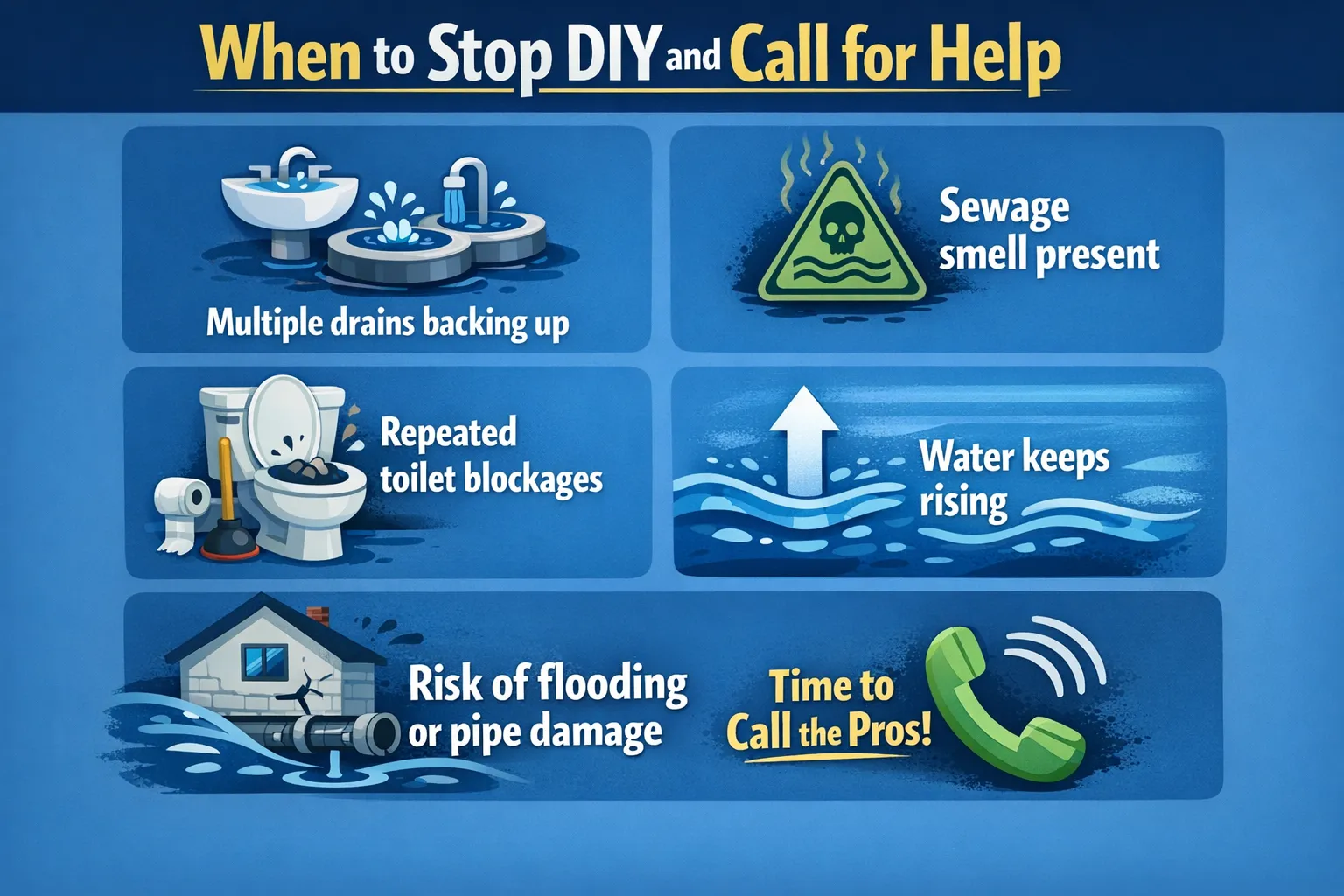
DIY stops being safe when:
- Multiple drains are backing up
- Sewage smell is present
- The toilet keeps blocking repeatedly
- Septic tank symptoms appear
Continuing DIY methods in these cases often leads to flooding, pipe damage, or septic failure.
What NOT to Use to Unblock a Toilet?
Some actions make toilet blockages worse and cause hidden damage. These are the most common mistakes I see in Irish homes.
1. Boiling Water
Boiling water can crack the toilet bowl and weaken seals. It also forces soft waste deeper into the waste pipe, turning a minor blocked toilet into a serious plumbing failure.
2. Chemical Drain Cleaners
Strong chemicals damage older pipes and are especially harmful to septic tank systems. They kill beneficial bacteria and can cause long-term drainage issues that don’t show immediately.
3. Repeated Flushing
Flushing again and again increases the water level and pressure. Instead of clearing the clog, it often pushes waste sideways or further down, creating a bigger blockage.
4. Mixing Chemicals
Never mix bleach with baking soda and vinegar or other cleaners. This can release dangerous fumes and still won’t fix the clogged toilet.
5. Pressure Washers or Improvised Tools
Using high-pressure tools or sharp objects inside the toilet bowl cracks porcelain and damages seals. These issues often appear weeks later as leaks.
Precautions to Take Based on Different Toilet Drainage Systems
Not all Irish homes drain the same way. Your system determines what is safe.
1. Septic Tank Systems
Avoid chemical cleaners and aggressive diy methods. Use enzyme-based treatments only. Frequent toilet blockages may indicate a full septic tank or outlet restriction, not a toilet issue.
2. Mains Sewer Connection
If multiple fixtures are slow or backing up, the problem may be beyond your property. Stop DIY attempts and assess whether a shared drain is involved.
3. Older Pipework
Older clay or cast-iron pipes crack easily. Gentle methods like hot water and washing-up liquid are safer than force-based solutions.
4. Modern Low-Flush Toilets
These toilets use less water and clog more easily with excessive toilet paper or wet wipes. Pressure-based methods should be used cautiously.
5. Properties with Shared Drains
Terraced and semi-detached homes often share waste pipes. One blocked toilet can affect neighbours, so early intervention matters.
How Long to Wait Between Each Unblocking Attempt
Timing matters more than people realise. Rushing causes damage.
After using hot water or baking soda and vinegar, wait at least 15–30 minutes before trying anything else. Enzyme cleaners should be left overnight. Never stack methods quickly; this overwhelms the system and increases failure risk.
What to Do If a Toilet Blocks Late at Night or on a Weekend
Blockages don’t follow office hours. Stay calm and act safely.
- Turn off the water supply immediately
- Remove excess water into a bucket and pour it into an external drain
- Avoid loud or forceful methods at night
- Keep the toilet unused until properly assessed
- Ventilate the area to reduce smells
Late-night panic causes most overflow damage.
Hidden Risks of DIY Unblocking That Can Cause Damage Without You Realising
Many issues don’t show straight away.
- Hairline cracks in the toilet bowl
- Seal damage leading to slow leaks
- Misaligned trap causing repeat clogs
- Septic tank bacteria disruption
These problems often surface weeks later as unexplained smells or recurring toilet blockages.
Temporary Toilet Fixes vs Permanent Solutions: Know the Difference
| Situation | Temporary Fix | Permanent Solution |
| Soft waste clog | Hot water | Usage adjustment |
| Repeat blockages | Enzyme cleaner | Drain or septic assessment |
| Solid object | Coat hanger | Professional removal |
| Septic issues | None | Tank inspection |
If a fix works once but the problem returns, it was temporary.
It’s Okay to Stop – Knowing When DIY Is No Longer Safe
Stop immediately if:
- Water keeps rising
- Multiple drains are affected
- Sewage smell appears
- Blockages repeat frequently
At this stage, forcing solutions increases damage. This is where calling for professional help is the safest decision.
Get Professional Help with Severe Blocking
Drain Cleaning and Maintenance
We at Drain Away handle severe blockages daily. When DIY methods fail, we clean drains professionally, restoring full flow safely and preventing repeat toilet blockages across Ireland.
CCTV Drain Survey
At Drain Away, we use CCTV surveys to see inside the waste pipe. This shows exactly where the blockage is, what caused it, and why it keeps returning, without digging or guesswork.
Septic Tank Inspection and Cleaning
We at Drain Away inspect and clean septic tanks when blocked toilets signal deeper issues. Proper inspection protects your septic tank, supports EPA compliance, and prevents costly failures.
Call Drain Away – We Serve Across Ireland
For advice, inspections, or emergency help, contact Drain Away.
- For Queries: 1800 938 837
- For Emergency: 087 2114053
Key Takeaways
- Always stop flushing first
- Match the method to the blockage type
- Avoid boiling water and harsh chemicals
- Septic tanks require special care
- Temporary fixes are not permanent solutions
- Knowing when to stop prevents costly damage
FAQs
Q. What is the easiest way to unblock a toilet?
The easiest method is hot (not boiling) water with washing-up liquid, which softens waste and reduces pipe friction.
Q. What can I pour down the toilet to unclog it?
You can pour washing-up liquid followed by hot water; it lubricates pipes and helps waste move naturally.
Q. Does Fairy Liquid unblock a toilet?
Yes, Fairy Liquid reduces friction inside pipes, helping toilet paper and waste slide through when combined with hot water.
Q. Can I pour boiling water down my toilet to unclog it?
No, boiling water can crack porcelain and damage seals, turning a small blockage into a costly plumbing issue.
Q. What does pouring salt in your toilet do?
Salt has a limited effect. It may slightly break down grease, but it won’t clear most toilet blockages effectively.
Q. How to unclog a toilet in 5 minutes?
Use a plunger correctly with steady pressure, or hot water and washing-up liquid for soft waste blockages.
Q. How long will a clogged toilet eventually unclog itself?
Some minor clogs clear within hours, but waiting risks overflow and pipe damage. Active, safe intervention is better.
Q. What not to do when unclogging a toilet?
Do not use boiling water, chemical cleaners, repeated flushing, or forceful tools that damage pipes and seals.
Q. Will hydrogen peroxide dissolve toilet paper?
Hydrogen peroxide is not reliable for toilet blockages and may disrupt septic systems without clearing the clog.
Q. How do plumbers unclog tough toilets?
Plumbers use controlled plunging, toilet augers, and system assessments, avoiding force that could damage pipes.
Q. What should you not flush down a toilet?
Never flush wet wipes, cotton products, sanitary items, plastics, or excessive toilet paper; they cause deep blockages.
Q. How do you unblock a badly blocked toilet with toilet paper?
Use hot water and washing-up liquid first, wait 10–15 minutes, then try gentle plunging if needed.
Q. How do you unclog a deep clog?
A toilet auger is safest for deep clogs; pushing forcefully often worsens the blockage or damages the trap.
Q. How to clear a toilet without a plunger
Hot water with washing-up liquid works well for soft blockages when no tools are available.
Q. How to unblock a toilet blocked with waste
Lubrication and gravity are key. Hot water and detergent soften waste without stressing pipes.
Q. How to clear a toilet full of tissue
Stop flushing, add washing-up liquid, pour hot water gently, and allow time before attempting another flush.
Q. How to unblock a toilet without equipment
Use household detergent and hot water, then wait patiently. Rushing causes overflows and pipe damage.
Q. How to unblock a badly blocked toilet fast
Act calmly, stop flushing, lower the water level, and use the correct method for the blockage type.
Q. How to unblock a toilet with a plunger properly
Create a tight seal and use slow, controlled pressure, aggressive plunging pushes blockages deeper.
Q. How to unblock a toilet with plastic stuck
Use a gloved hand or wrapped wire hook to remove the object gently; never push it further.
Q. How to unblock a toilet that is not draining
Slow drainage often signals a forming blockage or septic issue. Use gentle methods only, and avoid chemicals.
Q. When should I call a professional?
If blockages repeat, drains smell, or multiple fixtures are affected, stop DIY and call a professional.