
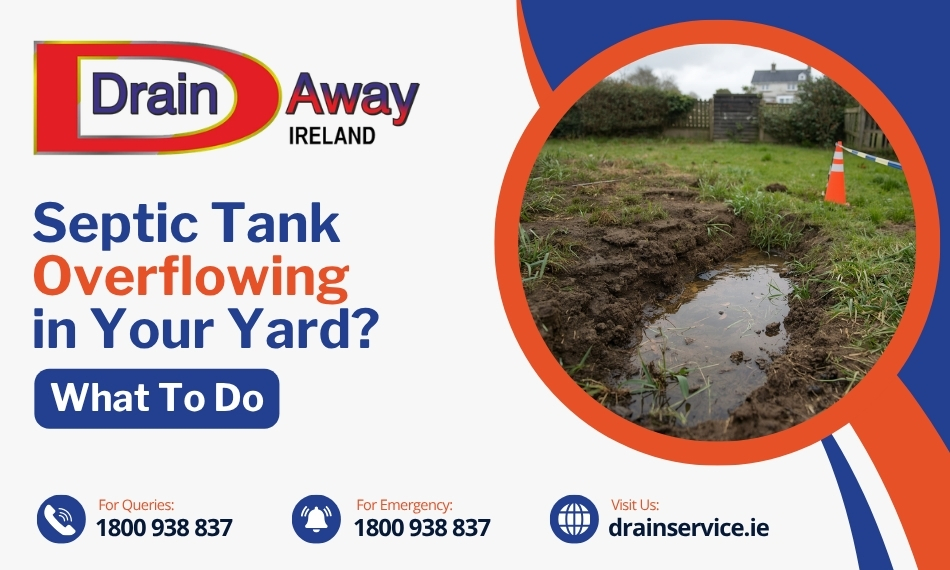
If your septic tank is overflowing in the yard, you should immediately reduce water use and contact a professional septic service. Overflow typically indicates that the septic system cannot process wastewater properly. In Ireland, this often occurs due to full tanks, blocked drains, or drainage field issues.
Common Causes of Septic Tank Overflow
Full Septic Tank
Over time, sludge and solid waste accumulate inside the tank. Without regular maintenance, the tank reaches capacity and cannot process wastewater properly, causing overflow into the yard.
Blocked Drain Pipes
When drain pipes become clogged with grease, sanitary products, or debris, wastewater cannot move efficiently through the septic system. This blockage often leads to septic tank overflows.
Drain Field Failure
The drain field or drainage field disperses treated wastewater into the soil. If the soil becomes saturated or compacted, wastewater cannot be absorbed properly and begins to pool outside.
Excessive Water Usage
Large amounts of water entering the system within a short time overload the septic tank. This can prevent waste from separating properly, causing the tank to overflow.
Harsh Chemicals Entering the Tank
Using strong cleaning chemicals can disrupt the natural bacteria inside the septic system. These bacteria break down waste. Without them, solids accumulate quickly, leading to septic tank problems.
Soil Compaction Around the Drain Field
Driving vehicles or heavy machinery over the drain field can compact the soil, reducing its ability to absorb wastewater and forcing untreated water back toward the yard.
Warning Signs Your Septic Tank Is About To Overflow
- Persistent sewage smell in the yard
- Slow drains in sinks, showers, or toilets
- Gurgling noises coming from plumbing fixtures
- Water is pooling around the septic tank area
- Unusually green or lush grass above the tank
- Wastewater surfacing near the drain field
- Toilets backing up inside the home
- Increased insect activity near wet patches
These warning signs indicate that the septic system may no longer be functioning properly and requires a professional inspection.
What To Do Immediately If Your Septic Tank Is Overflowing
Reduce Water Usage Immediately
Minimise household water use to prevent further strain on the septic system. Avoid washing machines, dishwashers, or long showers until the problem is inspected.
Keep People and Pets Away
Wastewater contains harmful bacteria. Keep children and pets away from the affected yard area to avoid health risks and contamination.
Identify the Overflow Area
Locate where wastewater is pooling. This information can help professionals determine whether the problem is related to the tank, drain pipes, or the drain field.
Check for Obvious Drain Issues
If you notice slow drains throughout the house, it may indicate a blockage affecting the entire system rather than a single fixture.
Avoid Opening the Septic Tank Lid
Septic tanks release harmful gases and should only be accessed by trained technicians with the proper equipment.
Contact a Professional Septic Service
A qualified technician can pump your septic tank, inspect the system, and determine whether the issue is due to tank level, a pipe blockage, or drainage failure.
What Not to Do Immediately If Your Septic Tank Is Overflowing
Do Not Attempt DIY Pumping
Trying to pump or empty a septic tank without proper equipment can damage the system and expose you to harmful bacteria and gases.
Avoid Using Harsh Chemicals
Pouring chemicals into the tank will not solve the problem. These harsh chemicals can kill beneficial bacteria that keep the septic system working.
Do Not Ignore the Problem
Many homeowners delay action when the overflow appears small. However, untreated wastewater can spread contamination across the garden.
Avoid Flushing Sanitary Products
Items such as wipes and sanitary products can clog drain pipes and exacerbate septic tank issues.
Do Not Drive Over the Drain Field
Heavy vehicles can compact soil and damage the drainage field, reducing wastewater absorption.
Avoid Excessive Water Use
Continuing normal water usage can overwhelm an already struggling system and increase the risk of septic tank overflows.
Why You Should Not Ignore a Septic Tank Overflow
Environmental Contamination
Overflowing wastewater can seep into the soil and potentially contaminate nearby groundwater or surface water sources.
Health Hazards
Untreated sewage contains bacteria and pathogens that can pose health risks to families, pets, and nearby neighbours.
Damage to Drain Field
When wastewater continuously floods the drain field, it can permanently damage the soil’s absorption capacity.
Expensive System Repairs
Ignoring early signs can lead to full septic system failure, requiring costly repairs or replacement.
Household Plumbing Issues
Backups in toilets and sinks often follow septic tank overflow, making everyday household use difficult.
Property Value Impact
Persistent septic issues can affect property value and complicate inspections when selling a home.
How Professional Septic Tank Services Fix the Problem
Septic Tank Inspection
A professional inspection evaluates the entire septic system, including tank levels, pipe conditions, and the surrounding drainage field. Technicians check for blockages, structural damage, or signs that the tank is operating beyond its normal capacity.
Septic Tank Pumping / Emptying
During this process, specialists pump your septic tank using professional vacuum equipment to remove sludge and wastewater. This restores the tank’s capacity and helps the system resume normal operation.
Pipe & Drain Field Assessment
Technicians inspect the drain pipes and drain field to determine whether wastewater is properly dispersing into the soil. If the soil is saturated or pipes are blocked, further maintenance may be required.
System Maintenance Recommendations
After inspection and cleaning, technicians may recommend regular maintenance schedules, adjustments to water use, or monitoring of the drainage area to prevent future septic tank issues.
How Often Should Septic Tanks Be Emptied in Ireland?
Septic tanks require regular maintenance to ensure they continue operating efficiently. The exact schedule depends on household size, water usage, and tank capacity.
Most Irish households should plan routine emptying to keep their septic system running smoothly and prevent sludge buildup.
Typical guidelines include:
- Small households: every 3–4 years
- Larger households: every 1–2 years
- Homes with high water usage may require more frequent service
- Systems experiencing slow drains may need earlier inspection
- Regular checks help detect developing septic tank problems
How Much Does Septic Tank Emptying Cost in Ireland?
| Factor | How It Affects Cost |
| Tank Size | Larger tanks require longer pumping time and increased disposal capacity |
| Access to Tank | Difficult access may require specialised equipment |
| Waste Volume | Tanks with heavy sludge buildup require longer cleaning |
| Location | Travel distance and service area influence pricing |
| Emergency Service | Urgent callouts may have additional service charges |
Regular servicing is usually more cost-effective than repairing a failed septic system.
How To Prevent Septic Tank Overflow in the Future
Schedule Regular Maintenance
Regular inspections and servicing keep the septic system running smoothly and prevent sludge buildup that leads to septic tank overflows.
Pump Your Septic Tank on Time
Pumping your septic tank regularly removes sludge buildup, protects the drain field, and helps the septic system operate efficiently.
Reduce Water Usage During Peak Periods
Reduce water usage by spacing laundry, showers, and dishwashing to prevent overloading the septic system and drainage field.
Avoid Flushing Non-Biodegradable Items
Avoid flushing wipes, nappies, and sanitary products, as they can block drains and cause serious septic tank issues.
Be Careful With Cleaning Products
Limit the use of harsh chemicals, as they kill beneficial bacteria that break down waste and keep septic systems functioning properly.
Protect the Drain Field Area
Avoid parking vehicles over the drain field, as heavy-weight vehicles can compact the soil and reduce wastewater absorption.
Monitor Early Warning Signs
Watch for slow drains, foul odours, or damp soil as early warning signs of developing septic tank problems.
Need Help Now? Call Drain Away for Immediate Septic Support
At Drain Away, we provide professional septic tank services across Ireland, including:
- Septic tank inspection
- Septic tank pump-out services
- Septic tank emptying and cleaning
- Drain and pipe inspection
- Septic system maintenance
If you notice warning signs such as slow drains, foul odours, or water pooling near the tank, call us now to prevent larger, more costly problems.
Key Takeaways
- A septic tank overflow indicates the system cannot properly handle wastewater.
- Common causes include full tanks, blocked drain pipes, and damaged drain fields.
- Warning signs include slow drains, bad smells, and water pooling outside.
- Ignoring the issue can cause health risks and costly repairs.
- Regular pumping and maintenance keep the septic system running smoothly.
- Preventive care helps avoid future septic tank overflows.
FAQs
Q. Can heavy rain cause septic tank overflow?
Heavy rainfall can saturate the drain field, preventing wastewater from infiltrating the soil and causing a temporary septic tank overflow.
Q. How long does septic tank pumping usually take?
Most septic tank pumping services take about one to two hours, depending on tank size, sludge levels, and access conditions.
Q. Is septic tank overflow dangerous for pets?
Wastewater contains harmful bacteria and contaminants. Pets should be kept away from areas where septic water has surfaced.
Q. Does every rural house in Ireland have a septic tank?
Many rural homes rely on private septic systems because they are not connected to municipal sewer networks.
Q. Can landscaping damage a septic drain field?
Deep-rooted plants or heavy landscaping structures can damage pipes or compact the soil, affecting the drainage performance.