
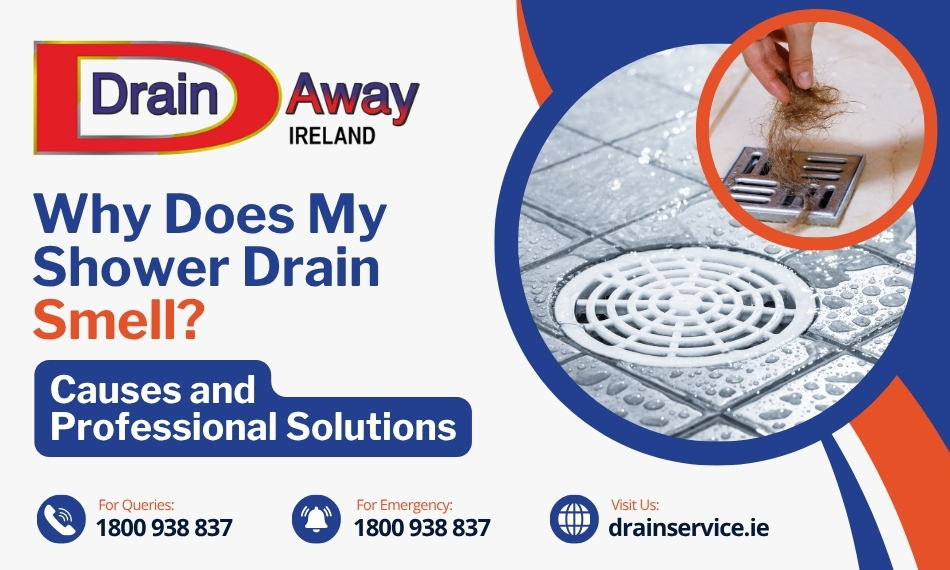
If your shower drain smells, the problem is usually caused by bacteria buildup, a blockage inside the pipe, a dry trap, or gases coming back from the sewer line. These issues occur inside the plumbing system, and the smell often becomes noticeable in the bathroom before a major blockage develops.
Main Causes of Shower Drain Smells in Irish Homes
Several technical factors can cause shower drain odours, especially in homes with older plumbing or drainage systems.
1. Buildup of Hair, Soap, and Organic Debris
One of the most common causes of clogged drains and bad odours is the buildup of everyday materials that enter the drain during normal shower use.
Over time, the drain collects:
- Hair
- Soap residue
- Shampoo and conditioner
- Skin oils and dead skin cells
These materials combine to form a sticky mass inside the pipes. As this organic material sits in the pipe, bacteria begin to break it down, producing gases that cause unpleasant odours.
2. Bacteria Growing Inside the Drain Pipe
Drain pipes create an environment where bacteria naturally develop. Warm water, soap residue, and organic matter create ideal conditions for microbial growth.
As bacteria feed on the material inside the pipes, they produce gases that travel back up through the drain opening.
These gases contain compounds such as hydrogen sulphide, which are commonly associated with sewage smell and drainage odours.
Even if the drain is not fully blocked, bacteria growing in the pipe walls can still produce strong smells.
3. A Dry P Trap Allowing Sewer Gases to Escape
Every shower drain has a curved section of pipe called a P-trap. This component plays an important role in preventing sewer gases from entering the home.
The P trap works by holding a small amount of water, which acts as a barrier that blocks gases coming from the sewer line.
However, if the shower is not used for an extended period, the water in the trap can evaporate. When this happens, the dry P trap can no longer block sewer gases, allowing odours to travel back through the drain.
4. Partial Blockages in the Drainage System
Another common cause of shower drain odours is a developing blockage further upstream in the drainage system.
Partial blockages may occur due to:
- Hair and soap buildup
- Grease or oils entering the pipe system
- Foreign objects entering the drain
- Pipe damage or collapsed sections
When wastewater cannot flow freely, organic material becomes trapped in the pipe, allowing bacteria to grow and produce odours.
5. Sewer Line Problems
In some cases, the odour from the shower drain may be due to a blockage in the main sewer line outside the home.
If the sewer line develops a problem, gases can travel through the pipe system and appear in the bathroom drain.
Possible causes include:
- Blocked sewer pipes
- Tree root intrusion
- Structural damage to underground drains
- Septic tank overflow issues
These situations can cause strong sewage odours in the bathroom and often require a full inspection of the drainage system.
6. Grease and Household Waste Entering the Drain System
Although grease typically enters the drainage system through kitchen sinks, it can still contribute to clogs in the wider plumbing network.
When grease cools inside pipes, it hardens and traps debris such as hair and soap residue. This creates an environment where bacteria thrive, resulting in unpleasant odours.
For this reason, drainage professionals often advise homeowners to avoid pouring grease or oils into the plumbing system, as they can cause long-term problems throughout the drainage network.
7. Poor Drain Ventilation
The plumbing system in a home includes vent pipes that regulate air pressure inside the drains.
If the ventilation system becomes blocked or damaged, it can cause pressure imbalances in the pipes. This may allow sewer gases to escape through drain openings, including the shower drain.
Signs of ventilation issues may include:
- Gurgling sounds in drains
- Intermittent odours from different fixtures
- Water levels are fluctuating inside the traps
Ventilation problems are usually identified during professional drain inspections.
Why Shower Drains Often Start Smelling Before They Block
Many homeowners expect a blockage to happen first, but in reality, the smell often appears before a full obstruction develops.
This occurs because a partial restriction within the pipe slows wastewater flow, allowing organic material to remain in the pipe longer. When water flow slows, the material inside the pipe begins decomposing.
A slow-draining shower, combined with odours, often indicates that the pipe interior is narrowing due to buildup, which requires professional drain cleaning to restore proper flow.
Why Certain Household Remedies Are Often Mentioned
When homeowners notice a shower drain smell, they often search for household remedies. Many online discussions mention using:
- Boiling water
- A cup of baking soda
- Baking soda and vinegar
- A small amount of water mixed with cleaning agents
These methods are commonly discussed because they may temporarily break down surface residue or loosen small amounts of organic buildup near the top of the pipe.
How Drainage Professionals Identify the Cause
When drainage professionals investigate shower drain smells, they focus on identifying the exact location and nature of the problem inside the plumbing system.
The inspection process usually includes several steps.
1. Initial Assessment
The drainage technician first examines visible signs such as:
- Slow-draining water
- Odour strength
- Gurgling pipes
- Water levels inside traps
This helps determine whether the issue is likely near the shower drain or further upstream in the pipe network.
2. Drain Flow Testing
Water flow tests help determine if the pipe is partially restricted. Slow-moving water often indicates a buildup or developing blockages.
3. CCTV Drain Inspection
If the problem appears to be deeper in the system, a CCTV drain inspection may be required. This technology allows professionals to insert a small camera into the pipe and examine the internal condition of the drain.
The inspection can identify:
- Hair and debris buildup
- Grease accumulation
- Structural pipe damage
- Tree root intrusion
- Sewer line blockages
This approach allows technicians to diagnose the exact issue without unnecessary disruption to the property.
Professional Drain Cleaning Methods
High-Pressure Water Jetting
High-pressure water jetting is a professional drain-cleaning technique that uses high-pressure streams of water to dislodge debris within pipes. It removes hair buildup, soap residue, organic sludge, and grease deposits, fully cleaning pipe walls and restoring proper wastewater flow.
Mechanical Rodding
Mechanical rodding is used when drains contain stubborn or solid blockages. Specialised rods are inserted into the pipe to physically break apart dense debris, foreign objects, or hardened obstructions. This method restores water flow and clears clogged drains, affecting the plumbing system.
Full Drain System Inspection
After cleaning the drain, technicians perform a complete inspection of the drainage system. Using specialist tools or CCTV equipment, they inspect pipe conditions, confirm proper flow, and ensure there are no blockages, damage, or underlying issues in the network.
Preventing Future Shower Drain Odours
Common professional recommendations include:
- Regularly checking for slow-draining water
- Ensuring shower drains remain clear of hair buildup
- Avoiding substances that contribute to clogged drains
- Maintaining good ventilation in bathrooms
- Monitoring the system for recurring unpleasant odours
In some homes, periodic drain maintenance may also help reduce the risk of recurring drainage issues, especially in properties with older plumbing systems.
When a Shower Drain Smell Requires Professional Attention
Occasional mild odours may appear temporarily, but persistent or strong smells usually indicate a deeper drainage issue.
Signs that the drainage system should be inspected include:
- Continuous sewage smell in the bathroom
- Shower drains smelling like rotten eggs
- Water draining slowly from the shower
- Recurring odours even after cleaning the drain opening
- Gurgling sounds inside the pipes
- Odours spreading to multiple drains in the home
These symptoms suggest the problem may involve pipe buildup, blocked drains, or sewer line issues within the plumbing system.
Need Professional Drain Cleaning in Ireland?
If your shower drain smells, water drains slowly, or unpleasant odours keep returning, the issue may be developing deeper within the drainage system.
At Drain Away, our drainage specialists provide professional drain cleaning, drain unblocking, and CCTV drain inspections across Ireland. Our team uses specialised equipment to locate blockages, remove debris, and restore normal flow throughout the drainage network.
For assistance with drainage problems, you can contact the Drain Away team for a professional assessment and support.
Conclusion
A smelly shower drain is rarely just a surface issue. In most cases, it indicates a developing issue in the plumbing system, such as organic buildup, partial blockages, a dry P-trap, or sewer gases entering the drainage network.
By identifying the cause early and ensuring the drainage system is functioning properly, homeowners can prevent larger problems such as blocked drains, sewer line issues, or wastewater backups.
Frequently Asked Questions
Q. Why does my shower drain smell like rotten eggs?
A rotten egg smell usually indicates the presence of hydrogen sulfide gas, which forms when bacteria break down organic material inside the drain pipes or sewer system.
Q. Can a dry P-trap cause a shower drain smell?
Yes. A dry P trap allows sewer gases to travel back through the drain opening. The trap normally contains water that blocks these gases from entering the home.
Q. Why is my shower draining slowly and smelling at the same time?
This usually means hair, soap residue, and organic debris have accumulated inside the pipe, restricting water flow and allowing bacteria to produce odours.
Q. Can a problem in the sewer line cause shower drain smells?
Yes. If there is a blockage or damage in the sewer line, gases may travel through the plumbing system and appear in household drains.
Q. Are unpleasant drain smells harmful?
Occasional odours are typically caused by bacteria or organic buildup, but persistent sewage odours may indicate ventilation or drainage issues that should be inspected.