
A bath that drains slowly or leaves water standing around the plug can be frustrating. In many cases, the cause is a build-up of hair, soap residue or other debris near the drain. Sometimes, however, the restriction is further along the waste pipe, or the plug mechanism itself is not opening properly.
Start with simple checks that can be completed safely without dismantling pipework. If the blockage keeps returning, water backs up into other fixtures or several drains are affected, the problem may need a professional assessment.
Why Is My Bath Drain Blocked?
Bath drains collect hair, soap residue, skin cells and residue from bathing products. These materials can gather around the plug or inside the waste connection, gradually reducing the space available for water to flow through.
Hair and soap residue
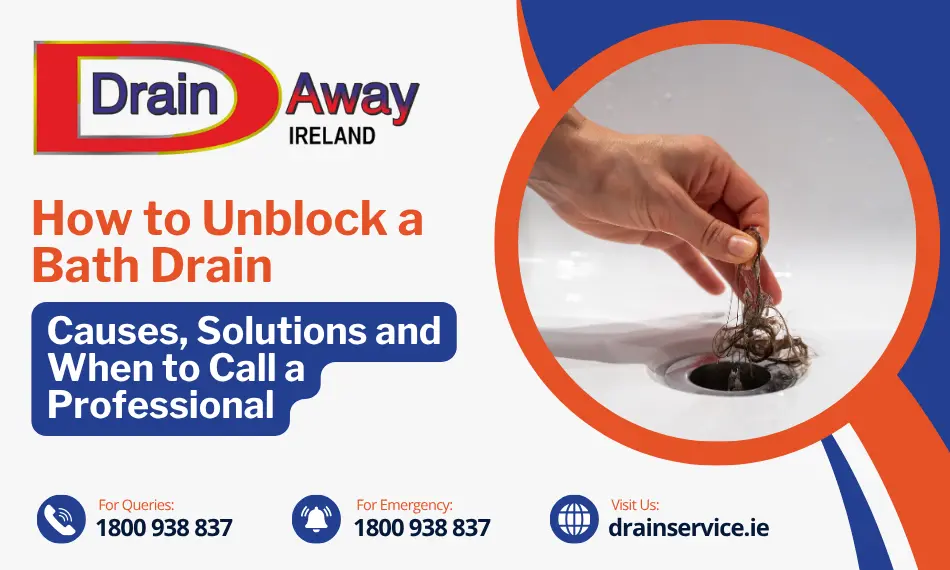
Hair can become trapped around the plug mechanism or combine with soap residue to form a dense obstruction. If water drains more slowly over time, check for visible debris around the drain opening before trying more involved methods.
Bath products, debris and other obstructions
Small items or excess product residue may also restrict the drain. Avoid pushing debris further into the pipe with sharp or unsuitable objects. Remove only material that is safely accessible.
Drain stopper or pipework problems
A faulty or partially closed stopper can restrict water flow even when there is no obvious blockage. If the plug does not lift or operate normally, check the manufacturer’s guidance before attempting adjustments. A deeper restriction may be present if the bath remains slow after visible debris is removed.
What Are the Signs of a Blocked Bath Drain?
Common signs include water taking longer than usual to drain, standing water around the plug, visible hair or residue, unpleasant smells and a blockage that returns after cleaning. If a nearby sink, shower or other fixture is also draining slowly, consider whether the issue extends beyond the bath waste.
Do not ignore wastewater backing up into another fixture. Stop using affected fixtures if this could worsen the backup and seek appropriate assistance.
How to Unblock a Bath Drain Safely
Before starting, follow the bath and drain manufacturer’s instructions. Wear suitable gloves when handling debris, keep cleaning products away from children and pets, and never mix drain cleaners or combine chemical products with other remedies.
Remove accessible hair and debris
If the plug or drain cover can be removed according to the manufacturer’s instructions, inspect the visible area for hair and residue. Remove accessible material carefully and dispose of it in the bin rather than pushing it into the pipe. Do not force a cover or mechanism that appears stuck.
Check the plug and stopper
Make sure the stopper is fully open and moves as intended. Pop-up and other bath waste mechanisms vary, so use the product instructions for the specific fitting. If the stopper is jammed or the mechanism requires dismantling that you are not comfortable doing, seek help rather than forcing it.
When a suitable plunger or drain tool may help
A plunger or purpose-designed drain tool may help with some local obstructions when used according to its instructions. Make sure the tool is suitable for the fitting and avoid excessive force. Do not use a plunger if a chemical drain cleaner has been used recently unless the product instructions explicitly say it is safe, because splashing chemical liquid can cause injury.
When to stop DIY attempts
Stop if the blockage does not improve, the drain cover is stuck, you suspect damaged pipework or wastewater starts backing up elsewhere. Repeated attempts can push debris further into the system or damage fittings.
How to Unblock a Bath Drain Full of Hair
Hair is a common cause of bath-drain restrictions. Where hair is visible and accessible, careful manual removal or a suitable drain-cleaning tool may help. Use tools only as directed and avoid forcing them past bends or into an unfamiliar waste mechanism.
Products marketed to dissolve hair do not suit every pipe or fitting, and results depend on the product and blockage. Read the label, use only as directed and never combine products. If hair is caught beyond the accessible drain opening or the blockage repeatedly returns, professional drain unblocking may be more appropriate.
What If the Bath Is Draining Slowly but Is Not Clogged?
A slow-draining bath does not always have a visible plughole blockage. The stopper may not be opening fully, residue may be further along the waste pipe, or a restriction may be present in connected pipework.
If visible debris has been removed but drainage remains slow, avoid assuming that stronger chemicals will solve the issue. If other fixtures are also affected or the problem keeps returning, the wider drainage system may need investigation.
Do Baking Soda, Vinegar or Drain Cleaners Work?
Home remedies such as baking soda and vinegar are often suggested online, but they should not be treated as a guaranteed way to clear a blocked bath drain. They may not remove a compacted hair obstruction or a restriction deeper in the pipework.
Commercial drain cleaners differ in their ingredients and instructions. Use only products suitable for the plumbing system and follow the label exactly. Never mix drain cleaners with bleach, vinegar or other cleaning products. Do not pour boiling water into a drain unless the fitting and pipe manufacturer’s guidance confirms that it is suitable; high temperatures can damage some materials and fittings.
If a chemical product has already been used, tell any professional you contact and follow the product’s safety instructions. Do not attempt a method that could cause chemical liquid to splash back.
When Should You Call a Professional Drain Unblocking Service?
Consider professional assistance if basic, safe checks do not restore normal drainage, the blockage keeps returning, the plug mechanism is stuck, or you suspect a restriction beyond the bath waste.
Professional help is particularly relevant when more than one fixture is affected, wastewater backs up, persistent foul smells develop, or there are signs of a deeper drainage problem. Drain Away’s professional drain unblocking service may be relevant when the issue appears to extend beyond a simple, accessible obstruction.
For recurring drainage restrictions, drain cleaning services may be appropriate. If the cause remains unclear and there are signs of a deeper pipework issue, a CCTV drain survey may help identify problems in accessible drainage pipes. The suitable service depends on the actual cause and should not be assumed before assessment.
How to Prevent Future Bath Drain Blockages
- Remove visible hair from the plug area regularly.
- Use a suitable hair catcher if it fits the bath waste correctly.
- Clean the plug and accessible parts in accordance with the manufacturer’s instructions.
- Avoid allowing large amounts of hair, soap residue or debris to collect around the drain.
- Do not pour fats, oils or unsuitable cleaning products into household drains.
- Investigate repeated slow drainage rather than relying on the same remedy each time.
Conclusion
A blocked bath drain is often caused by hair and soap residue, but slow drainage can also result from a stopper problem or a restriction further along the waste pipe. Start with safe, simple checks, follow product instructions and avoid methods that could damage fittings or expose you to chemicals. If the blockage persists, returns repeatedly or affects other fixtures, a professional assessment can help identify the cause and the appropriate next step.
Frequently Asked Questions
How do you unblock a badly blocked bathtub drain?
Start by checking for visible debris and confirming that the stopper opens fully. Use only suitable tools according to their instructions. If the blockage remains, the drain cover is stuck, or water backs up elsewhere, stop DIY attempts and seek professional help.
What dissolves hair in a bath drain?
Some commercial products are designed to break down hair, but effectiveness and suitability vary. Follow the product label, never mix cleaning products and consider mechanical removal of accessible hair. Persistent blockages may need professional attention.
How do you fix a slow-draining bathtub?
Check the stopper and remove accessible hair or debris safely. If the bath remains slow, or other fixtures are affected, the restriction may be further along the pipework and need assessment.
What can you put down a bathtub drain to unclog it?
There is no single liquid that safely clears every blockage. Start with visible debris and suitable mechanical methods. If considering a drain cleaner, confirm it is suitable for the fitting and follow its instructions exactly.
How long should a bath take to drain?
Drainage time varies with bath design, waste fitting and water flow. A noticeable change from the bath’s usual drainage rate is more useful as a warning sign than relying on one universal time.
How much does it cost to unblock a drain in Ireland?
Costs vary by provider, location, access, severity and whether additional investigation is needed. Obtain a quote that explains what is included before agreeing to work; do not rely on a generic figure as a guaranteed price.
Can I unblock a drain myself?
Some simple blockages caused by accessible hair or debris can be addressed with safe basic checks. Avoid dismantling unfamiliar plumbing or mixing chemicals. Persistent blockages, wastewater backups or multiple affected fixtures warrant professional assessment.