
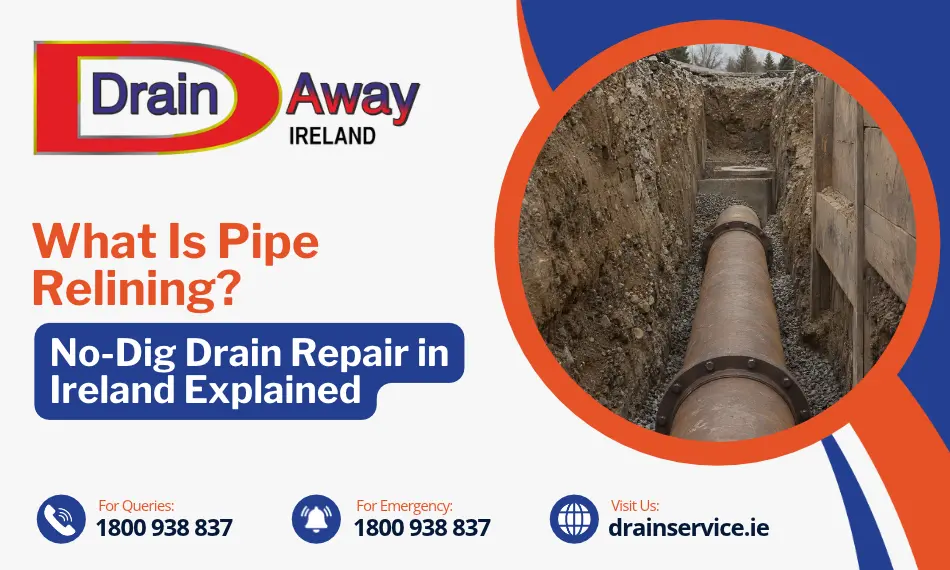
Damaged drainage pipes can cause recurring blockages, leaks, unpleasant smells and problems with wastewater flow. Traditionally, repairing an underground drain could involve excavating the affected area and replacing the damaged section. However, pipe relining offers another option in suitable situations.
Pipe relining, also known as drain relining or no-dig drain repair, involves installing a new lining inside an existing pipe to repair certain types of damage without replacing the entire pipe. The method can reduce excavation and disruption, particularly where drains run beneath driveways, gardens or paved areas.
But does pipe relining work, how does the process operate, and is it always better than replacing a damaged pipe? This guide explains what Irish property owners should know before considering this type of drain repair.
What Is Pipe Relining?
Pipe relining is a method of repairing an existing drainage pipe by creating a new internal lining within the damaged section. Instead of removing the entire pipe, a specialist installs a resin-based liner inside the original pipe and allows it to cure.
Once cured, the liner forms a new internal surface that can seal certain cracks, holes and leaking joints. It can restore the pipe’s ability to carry wastewater without requiring the same level of excavation as traditional replacement.
Pipe relining is commonly associated with trenchless technology because the repair is generally carried out through existing access points, such as manholes or inspection chambers.
It may be considered for domestic and commercial drainage systems, depending on the pipe’s condition, size, layout and accessibility.
How Does Pipe Relining Work?
The exact method depends on the relining system being used, but the process generally involves several stages.
1. Inspecting the Drain with CCTV
A CCTV drain survey is usually carried out to identify the location and extent of the damage. A specialist camera is passed through the pipe to examine its internal condition.
The inspection can help identify:
- Cracks and fractures in the pipe wall
- Leaking or displaced joints
- Tree root ingress
- Corrosion or deterioration
- Repeated blockage points
- Sections that may be unsuitable for relining
A proper inspection is important because not every damaged pipe can be repaired using a liner.
For more information, read our guide to CCTV drain survey costs in Ireland.
2. Cleaning and Preparing the Pipe
Before installing a liner, the affected pipe usually needs to be cleaned. Grease, debris, scale and tree roots may need to be removed so that the liner can fit correctly against the internal pipe surface.
Depending on the condition of the drain, professional cleaning or specialist equipment may be required.
Also Read: how professional drain cleaning improves drain flow
3. Installing the Liner
A flexible liner, often made from a suitable fabric or fibreglass material impregnated with resin, is positioned inside the damaged pipe.
The liner is introduced through an access point and placed across the section requiring repair. Depending on the system, an inflation packer or another installation method may be used to hold the liner against the internal pipe wall.
4. Curing the Resin
The liner is held in position while the resin cures. The curing method depends on the technology being used.
Some systems use hot water or steam, while others use ultraviolet (UV) light. Once the resin has cured, the liner hardens and forms a new internal pipe surface.
5. Final Inspection
After installation, a further inspection may be carried out to check the finished lining and confirm that the repaired section is suitable for returning to service.
The inspection can help identify installation issues and confirm whether the repair has addressed the original problem.
What Is CIPP Pipe Relining?
CIPP stands for Cured-in-Place Pipe. It is a trenchless pipe rehabilitation method that creates a new pipe lining inside an existing damaged pipe.
A resin-impregnated liner is positioned inside the host pipe and cured to form a solid internal structure. The process can be used to repair certain cracks, leaks and defective joints without removing the entire existing pipe.
Different CIPP systems use different curing methods, including:
- Hot water curing: Heated water is used to cure the resin inside the liner.
- Steam curing: Steam is used as the heat source during the curing process.
- UV curing: Ultraviolet light is used to harden a specially designed resin liner.
The most suitable method depends on the pipe dimensions, damage, access conditions and the equipment available to the contractor.
What Is UV Pipe Relining?
UV pipe relining is a type of CIPP rehabilitation that uses ultraviolet light to cure a resin-impregnated liner.
The prepared liner is positioned inside the existing pipe. A UV light source is then moved through the liner to activate the curing process, creating a hardened internal lining.
UV CIPP systems are used in some domestic, commercial and industrial drainage applications. Their suitability depends on the pipe’s condition and the specifications of the lining system.
It is important to understand that UV relining is not automatically suitable for every drain. A technical inspection is needed before selecting the repair method.
When Is Pipe Relining Suitable?
Pipe relining may be considered when an existing pipe has structural defects but still retains enough of its shape to accommodate a new liner.
Depending on the inspection findings, it may be suitable for:
- Cracked or fractured drainage pipes
- Leaking pipe joints
- Localised holes or defects
- Certain cases of tree root ingress
- Deteriorated sections of underground drains
- Some recurring drainage problems caused by damaged pipework
For example, tree roots can enter drainage systems through cracks or gaps in pipe joints. A suitable lining may seal these entry points after the roots and other obstructions have been properly removed.
Read our guide to tree roots in drains in Ireland to understand how root growth can affect underground drainage systems.
When Is Pipe Relining Not Suitable?
Pipe relining is not a universal solution. In some situations, traditional excavation and pipe replacement may be more appropriate.
Relining may not be suitable where:
- The pipe has completely collapsed.
- The pipe has lost too much of its original shape.
- Severe deformation prevents a liner from being installed correctly.
- The drainage layout or access conditions make installation impractical.
- The damage requires more extensive structural work.
A CCTV inspection and professional assessment can help determine whether relining is technically possible or whether another repair method is needed.
Does Pipe Relining Work?
Yes, pipe relining can be an effective repair method when the existing pipe is suitable and the correct installation process is followed.
A properly installed liner can seal certain cracks, holes and leaking joints, creating a new internal surface within the original pipe. It can also reduce the need to excavate areas above underground drains.
However, the results depend on several factors, including:
- The original condition of the pipe
- The type and extent of damage
- The relining material and curing method
- The quality of preparation and installation
- Whether the repair is suitable for the particular drainage system
Pipe relining should not be treated as a solution for every damaged drain. A collapsed or severely deformed pipe may require excavation and replacement instead.
Pipe Relining vs Traditional Pipe Replacement: Which Is Better?
Both methods can repair damaged drainage systems, but they work differently. The right choice depends on the condition of the pipe, access requirements and the extent of the damage.
| Comparison | Pipe Relining | Traditional Pipe Replacement |
|---|---|---|
| Repair method | Installs a liner inside the existing pipe | Removes and replaces the damaged pipe |
| Excavation | Often avoids extensive excavation | Usually requires excavation |
| Surface disruption | Can be lower where existing access is suitable | May affect gardens, driveways and paving |
| Suitable damage | Certain cracks, holes and leaking joints | Can address severely damaged or collapsed pipes |
| Access | Requires suitable access points | Requires access to the pipe from the surface |
| Cost considerations | Depends on liner length, preparation and access | Includes excavation, replacement and reinstatement |
Is Pipe Relining Better Than Replacement?
Pipe relining can be a practical option where the existing pipe is structurally suitable for a liner. It may reduce excavation, surface reinstatement and disruption.
However, traditional pipe replacement may be necessary where the pipe has collapsed, become severely deformed or cannot support a lining system.
Neither option is automatically better in every situation. The most appropriate solution should be based on the findings of a drain inspection rather than cost or convenience alone.
How Much Does Pipe Relining Cost in Ireland?
The cost of pipe relining in Ireland depends on the work required and the condition of the existing drainage system. There is no single price that applies to every property.
Several factors can affect the final cost:
- Length of the damaged pipe: Longer sections generally require more lining material and installation work.
- Extent of damage: A small localised defect may require a different repair approach from multiple damaged sections.
- Pipe diameter: The size of the existing pipe affects the materials and equipment required.
- Accessibility: Drains with suitable manholes or inspection chambers may be easier to access.
- Preparation work: Removing tree roots, grease, scale or other obstructions can add to the work involved.
- Relining method: Different CIPP and UV systems may have different material and equipment requirements.
A CCTV drain survey can help establish the location and condition of the damage before a repair method and price are recommended.
For a fair comparison, property owners should request a clear quotation explaining the proposed repair, the length of pipe involved and any additional preparation work.
Why Is a CCTV Drain Survey Important Before Pipe Relining?
A CCTV drain survey helps establish whether pipe relining is a suitable repair option.
Without inspecting the inside of the pipe, it can be difficult to determine the exact location, severity and nature of the damage. A camera inspection provides a clearer view of the drainage system and helps identify defects that may affect the repair.
A survey can help establish:
- Whether the pipe has cracks, holes or displaced joints
- Whether tree roots have entered the drainage system
- Whether the pipe has collapsed or become deformed
- The approximate location and length of the affected section
- Whether the pipe is suitable for a lining system
This assessment helps avoid recommending a repair method that may not address the underlying problem.
Also read: benefits of conducting drain CCTV surveys
Frequently Asked Questions About Pipe Relining
What is pipe relining?
Pipe relining is a trenchless drain repair method that installs a new lining inside an existing damaged pipe. A resin-based liner is positioned and cured to create a new internal surface without necessarily excavating and replacing the entire pipe.
Does pipe relining work?
Yes, pipe relining can repair certain cracks, holes and leaking joints when the existing pipe is suitable. The result depends on the pipe condition, preparation, lining material and installation quality.
Is pipe relining cheaper than replacement?
It can be cheaper where it avoids extensive excavation and reinstatement work. However, the actual cost depends on the damage, pipe length, access and preparation required. In some cases, replacement may be the more appropriate option.
How much does drain relining cost in Ireland?
There is no fixed price for drain relining. Costs depend on the length and diameter of the pipe, the extent of the damage, access conditions, preparation work and the relining method. A CCTV survey can help establish the work required before a quotation is prepared.
How long does pipe relining take?
The time required depends on the length of the pipe, the condition of the drain, the preparation needed and the curing method. Smaller repairs may take less time than longer or more complex installations. A contractor should provide an estimated timeframe after inspecting the drainage system.
Can tree roots be repaired with pipe relining?
In suitable cases, pipe relining can seal cracks and joints through which tree roots enter a drain. However, the roots generally need to be removed before the liner is installed. Severe pipe damage may require a different repair method.
Can a collapsed drain be relined?
A completely collapsed or severely deformed drain is generally unsuitable for conventional relining because the liner needs an existing pipe structure in which to be installed. Excavation and replacement may be necessary.
Conclusion
Pipe relining can provide an alternative to traditional drain replacement when an underground pipe has suitable structural conditions. By installing a new lining inside the existing pipe, the method can repair certain defects while reducing the need for excavation.
However, the right repair depends on the type of damage, the condition of the pipe and the accessibility of the drainage system. A CCTV drain survey is an important first step in understanding the problem and deciding whether relining or replacement is more appropriate.
If you are experiencing recurring blockages, leaks or other drainage problems, contact Drain Away to discuss the issue and find out what inspection or repair options may be suitable for your property.