
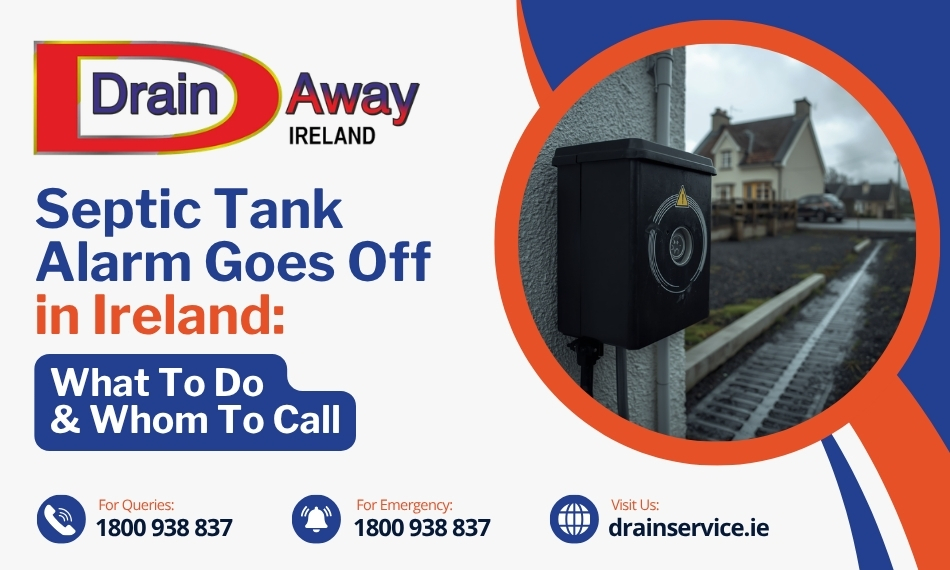
If your septic tank alarm is sounding unexpectedly, the first thing to understand is that the system is warning you about an abnormal condition inside your septic tank or wastewater treatment system.
In many Irish properties, especially rural homes and commercial sites using pump-assisted systems, the alarm is designed to alert property owners before a more serious failure develops.
Drain Away septic tank professionals recommend that, if the alarm continues sounding continuously, septic tank troubleshooting is required to identify the exact cause safely and correctly.
What Is a Septic Tank Alarm?
A septic tank alarm is part of a wastewater alarm system designed to monitor abnormal operating conditions within the septic system. Modern septic systems, particularly pump-assisted installations and wastewater treatment units, use alarms as an early warning mechanism before overflow or pump failure occurs.
The alarm system may monitor:
- Septic tank water level
- Pump chamber activity
- Electrical supply faults
- Septic tank float switch movement
- High water conditions
- Effluent pump operation
- Internal control panel warnings
Why Is Your Septic Alarm Going Off?
Several operational problems can trigger a septic tank alarm to beep unexpectedly. Some issues are minor warning signals, while others indicate a developing system failure requiring immediate inspection.
Reason 1: Septic Tank Is Full
One of the most common causes of septic tank alarm problems in Ireland is excessive sludge accumulation inside the tank. Over time, solids settle at the bottom while fats and floating waste rise to the surface. If septic tank maintenance has been delayed, the working capacity of the system becomes restricted.
This creates:
- rising wastewater levels
- slow discharge
- pressure on the outlet system
- increased risk of backups
Eventually, the system may trigger a septic tank high water alarm because wastewater can no longer move efficiently through the tank.
Reason 2: Pump Failure or Electrical Fault
Many Irish septic systems rely on electrical pumps to move wastewater through different treatment stages. When the pump stops working, water levels begin rising almost immediately.
A septic tank pump failure should never be ignored because continued water usage may quickly overwhelm the chamber.
It is also important to understand that wastewater systems combine electrical components with hazardous waste environments. Attempting DIY electrical repairs around septic chambers is unsafe and may worsen the problem.
Reason 3: Float Switch Failure
The septic tank float switch controls water level monitoring inside the chamber. When water rises beyond the normal range, the float activates the alarm.
However, float systems themselves can fail because of:
- grease accumulation
- debris interference
- corrosion
- damaged wiring
- sticking mechanisms
In these situations, the alarm may activate intermittently or continuously even if the tank itself is not fully overloaded.
Reason 4: Blocked Outlet or Drainage Field Problems
Another major cause of septic tank drainage issues involves restricted wastewater dispersal into the drain field or percolation area.
If treated wastewater cannot exit correctly, pressure builds inside the system and water levels begin rising back toward the chamber. This can trigger a septic tank overflow warning before external flooding becomes visible.
Drain field problems in Ireland are often linked to:
- saturated ground
- blocked outlet pipes
- compacted soil
- root intrusion
- poor drainage conditions
- ageing soakaway systems
These issues become particularly common after periods of prolonged rain.
Reason 5: Heavy Rainfall & Ground Saturation in Ireland
Irish weather conditions play a major role in septic system performance. During periods of heavy rainfall, groundwater pressure around the drainage area increases significantly.
When the surrounding soil becomes saturated:
- wastewater dispersal slows down
- Soakaways become overloaded
- drainage efficiency drops
- High water conditions develop inside the tank
Because weather-related septic issues can escalate quickly, professional assessment is often required before permanent damage develops.
What You Should Do Immediately When the Alarm Sounds
A septic alarm should always be treated as an operational warning rather than a minor inconvenience. In many Irish properties, alarms activate before visible wastewater flooding begins, which means early action can often prevent larger septic tank overflow situations and expensive structural damage.
The first priority is reducing pressure on the septic system while the issue is being assessed professionally.
1. Reduce Water Usage Immediately
Once the alarm activates, every litre of water entering the system increases pressure inside the tank or pump chamber. If the wastewater level is already elevated, continued water usage may force sewage back into internal pipework or overloaded drainage areas.
To reduce strain on the system:
- Avoid showers and baths
- Stop using washing machines
- Limit toilet flushing
- Avoid running dishwashers
- Reduce sink usage where possible
This is especially important in properties using pump-assisted septic systems where a septic tank pump failure may already be preventing wastewater movement through the treatment process.
Many homeowners continue normal water usage after the septic tank warning alarm activates because drains still appear functional initially. However, wastewater systems can deteriorate rapidly once water levels exceed safe operating conditions.
2. Check for Visible Signs of Overflow or Drainage Failure
While the alarm itself is often the first warning sign, external symptoms may already be developing around the property.
Common septic tank backup signs include:
- Pooling water near the tank
- Wet or spongy ground
- Foul septic tank smells
- Gurgling sounds from drains
- Slow toilets or sinks
- Wastewater surfacing near the drain field
- Overflow around inspection covers
If any of these symptoms are visible alongside a septic system alarm sounding, the system may already be approaching overflow conditions.
Properties experiencing septic tank drainage issues after prolonged rain should take particular care because Irish ground conditions can remain saturated for extended periods, especially in rural areas with older soakaway systems.
3. Do not Ignore the Alarm
One of the biggest mistakes property owners make is silencing or ignoring the alarm for several days without investigating the cause properly.
A septic tank high water alarm is designed specifically to warn of abnormal wastewater conditions before major contamination occurs. Ignoring it can eventually result in:
- Internal sewage backup
- Wastewater flooding
- Property damage
- Environmental contamination
- Drain field failure
- Septic tank overflow
- Expensive emergency repairs
In commercial properties such as restaurants, hotels, and hospitality facilities, delayed action may also create hygiene and compliance concerns due to wastewater escaping the system.
Even when the alarm temporarily stops, underlying septic tank alarm problems may still exist internally. Intermittent alarms often indicate developing float switch faults, unstable pump operation, or drainage restrictions that worsen over time.
4. Do not Attempt DIY Repairs on Electrical Components or Pumps
Modern wastewater alarm systems often involve:
- electrical control panels
- submerged pumps
- float switches
- high-voltage components
- confined wastewater chambers
Attempting to dismantle or repair these systems without specialist knowledge can create serious safety risks.
A septic tank electrical issue should never be approached casually because wastewater environments contain:
- harmful gases
- bacteria
- contaminated water
- electrical hazards
Additionally, opening chambers or interfering with pump components without correct inspection equipment can sometimes worsen the fault or damage operational settings within the system.
When Should You Call a Septic Tank Specialist?
In Ireland, septic systems are heavily influenced by rainfall, drainage conditions, soil performance, and long-term maintenance history. Once an alarm continues sounding beyond a short temporary fluctuation, professional inspection is generally recommended.
You should arrange a professional septic system inspection if:
- The alarm continues running constantly
- The alarm returns repeatedly
- Water drains slowly inside the property
- Bad smells are developing
- Overflow signs appear externally
- Heavy rain recently affected the property
- The septic tank has not been serviced recently
- Pump chambers appear overloaded
- The wastewater alarm system remains active after resetting
In many cases, what initially appears to be a minor warning can actually indicate larger developing drain field problems or internal mechanical faults.
Common Septic Alarm Problems Found During Inspections
Experienced septic technicians across Ireland commonly respond to problems such as:
- Septic tank high water alarm activation
- Septic tank pump failure
- Faulty septic tank float switch systems
- Drain field saturation
- Septic tank overflow warning conditions
- Wastewater backing up into inspection chambers
- Electrical control panel faults
- Blocked outlet pipes
- Pump chamber flooding
- Excess sludge accumulation inside the septic tank
In older Irish septic installations, multiple issues may occur simultaneously. For example, a partially full tank combined with poor drainage conditions after heavy rain can quickly overload the entire septic system.
This is why professional assessment focuses on the full operating condition of the system rather than simply silencing the alarm.
What Happens During a Professional Septic Inspection?
A professional septic tank inspection service in Ireland typically involves a full operational assessment of the wastewater system to identify the exact cause of the alarm activation.
The inspection process may include:
- Inspecting the alarm control panel
- Checking wastewater levels inside the chamber
- Assessing pump performance
- Testing float switch operation
- Examining electrical connections
- Inspecting outlet flow conditions
- Checking for septic tank drainage issues
- Evaluating sludge accumulation
- Assessing drain field performance
- Determining whether septic tank pump-out services are required
Professional inspections are particularly important in properties where alarms recur repeatedly because underlying structural or drainage problems may already be developing beneath the surface.
Need Emergency Septic Support Across Ireland? Call Drain Away
If a septic alarm continues sounding, early intervention is always preferable to waiting for visible overflow or internal backup conditions to develop.
Drain Away provides professional support for:
- septic tank troubleshooting
- emergency wastewater issues
- septic tank pump out
- septic tank repair Ireland
- alarm diagnostics
- drainage inspections
- pump chamber faults
- septic system inspection
- wastewater system failures
Timely assessment can often prevent far more serious structural and environmental problems later within the septic system.
Conclusion
A septic alarm is designed to provide an early warning before major wastewater failure occurs. While some alarms result from temporary fluctuations, many indicate developing operational issues inside the septic system that require immediate attention.
Whether the problem involves a septic tank electrical issue, blocked drainage area, overloaded tank, or septic tank pump failure, ignoring the warning can eventually lead to overflow, contamination, and expensive repairs.
FAQs
Q. How much time do I have after my septic alarm goes off?
You should reduce water usage immediately and arrange inspection quickly, as overflow and wastewater backup can develop within hours sometimes.
Q. Why is my septic alarm going off randomly?
Random septic alarms often indicate float switch faults, electrical interruptions, pump issues, or temporary high water conditions inside chambers.
Q. How do I reset a septic alarm?
Most systems have reset switches, but resetting without identifying underlying faults may temporarily silence serious wastewater system problems internally.
Q. What does the alarm on my septic tank mean?
The alarm usually warns about abnormal wastewater levels, pump malfunction, drainage restrictions, or electrical issues affecting septic system operation.
Q. What are the signs that your septic system is failing?
Common warning signs include foul smells, slow drains, wastewater pooling, recurring alarms, gurgling pipes, and septic tank overflow conditions.
Q. Do septic alarms go bad?
Yes, septic alarms can fail because of damaged wiring, moisture exposure, corrosion, ageing components, or faulty float switch mechanisms internally.
Q. What are the signs that your septic tank is full?
Slow drainage, septic tank smells, high water alarms, overflowing inspection covers, and wastewater backup often indicate an overloaded septic tank.
Q. How much does it cost to replace an aerator in a septic system?
Aerator replacement costs vary depending on system type, accessibility, electrical configuration, and whether additional wastewater treatment repairs are required.
Q. Is a sump pump alarm a big deal?
Yes, sump pump alarms usually indicate rising water levels, pump failure, or electrical problems requiring quick professional inspection and assessment.
Q. What should I avoid flushing into a septic system?
Avoid flushing wipes, grease, chemicals, sanitary products, oils, food waste, and non-biodegradable materials that damage septic system performance significantly.
Q. Why is the red light flashing on my septic tank?
A flashing red light usually indicates high water levels, pump malfunction, float switch failure, or electrical faults inside the septic system.
Q. What is the alarm on the aerobic septic system?
Aerobic septic alarms monitor aerator performance, wastewater levels, pump operation, and treatment efficiency to prevent septic system failure conditions.