
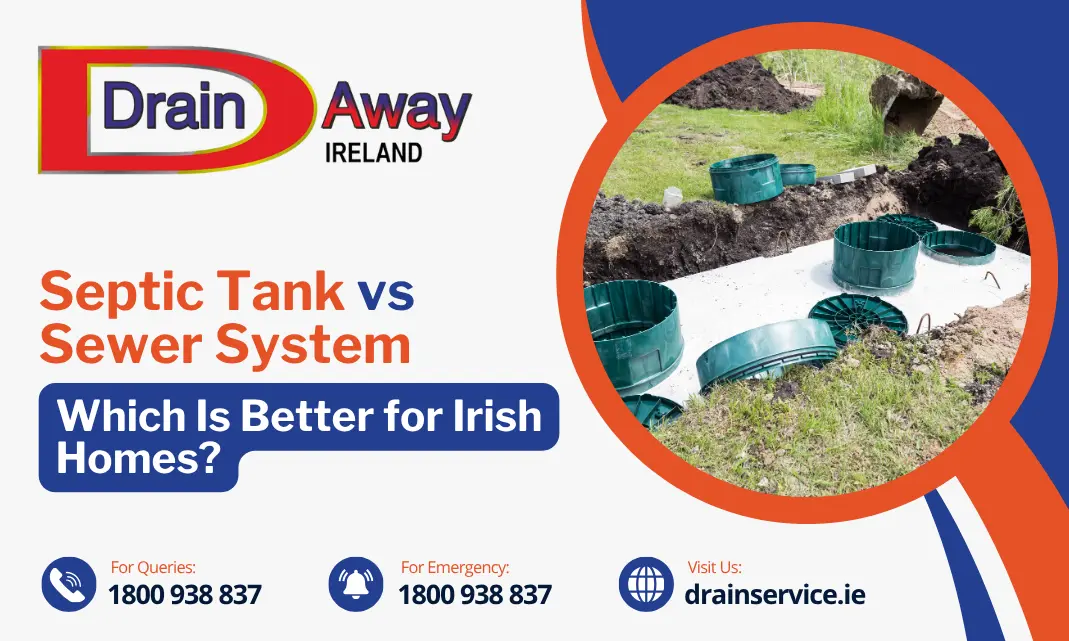
If you’re choosing between a septic tank and public sewer for your home in Ireland, neither system is automatically better. According to Irish government guidance, the right choice depends on your property’s location, whether a public sewer is available, and whether the site is suitable for an on-site wastewater treatment system.
For most homes in towns and cities, a public sewer in Ireland connection is the standard option. For many rural homes Ireland, a private wastewater treatment system, such as a septic tank, is the practical and often necessary solution.
Why Some Irish Homes Have Septic Tanks While Others Use Public Sewer Systems
Many people assume every home should connect to the public sewer network. In Ireland, that is not always possible because wastewater infrastructure depends on where the property is located.
Rural homes often rely on septic tanks
Large parts of rural Ireland are spread across the countryside, where extending public sewer infrastructure to every individual property is not practical. For this reason, many one-off houses and farms use a septic tank Ireland system with a percolation area or drain field to treat and safely disperse household wastewater on-site.
Urban areas usually connect to the public sewer
Homes in towns and cities are generally connected to the public sewer network. Wastewater leaves the property through underground sewer pipes before being transported to a central wastewater treatment plant, where it is treated before being safely released back into the environment.
Property location determines the suitable system
When planning a new home, the first question is not whether a septic tank or sewer is better. Instead, the important question is whether the property can reasonably connect to an existing public sewer. If not, a suitable domestic sewage system must be designed for the site.
Ground conditions also influence the decision
A septic tank cannot simply be installed anywhere. Irish guidance requires a proper site assessment to check soil depth, drainage characteristics, available space, groundwater protection, and whether the land can safely support a percolation area without creating environmental risks.
The government focuses on suitability rather than preference
Irish guidance does not recommend one wastewater system over another for every property. Instead, the emphasis is on choosing a system that suits the site, protects public health, prevents pollution, and complies with current septic tank regulations and planning requirements.
How a Septic Tank Works Compared With a Public Sewer System
Although both systems deal with household wastewater, they work very differently. Understanding the journey of wastewater makes it much easier to compare a mains sewer vs septic tank.
How wastewater moves through a septic tank
Wastewater from toilets, showers, sinks, washing machines, and kitchens flows into the septic tank. Heavy solids settle to form sludge, lighter materials float, and partially treated liquid leaves the tank before flowing into the underground drain field or percolation area, where the surrounding soil provides further natural treatment.
How a public sewer system works
In a public sewer system, wastewater leaves your property immediately through underground sewer pipes. Instead of being treated on your land, it travels through the public network to a central wastewater treatment facility operated by the relevant public authority.
Where treatment actually happens
With a septic tank, most of the treatment happens on your own property using the tank and surrounding soil. With a public sewer, treatment takes place away from the property at a dedicated treatment plant serving many homes.
Homeowner responsibilities differ
If your property has a septic tank, you are responsible for septic tank maintenance, arranging septic tank servicing, monitoring the system, preventing pollution, and ensuring it continues operating safely. A neglected system can eventually lead to blockages, overflows, and environmental risks.
Public authorities manage the sewer network
Where a home connects to the public sewer, the wider sewer infrastructure and treatment facilities are managed by the relevant public authority. Homeowners remain responsible for the plumbing within their own property but not for operating the municipal treatment works.
Septic Tank vs Sewer System Comparison for Irish Homeowners
Choosing between a septic tank or sewer involves more than installation. Homeowners should understand how each option affects long-term ownership, responsibilities, and wastewater management.
| Factor | Septic Tank | Public Sewer |
|---|---|---|
| Installation | Requires suitable site, assessment and on-site system | Requires access to an existing sewer connection |
| Running costs | Includes periodic septic tank servicing and septic tank emptying | Usually involves public wastewater service charges where applicable |
| Maintenance | Homeowner arranges inspections and servicing | Public sewer infrastructure managed by public authority |
| Repairs | Owner responsible for system repairs | Internal pipework is homeowner’s responsibility; network repairs are managed publicly |
| Responsibility | Private home wastewater system | Shared public infrastructure |
| Reliability | Reliable when correctly installed and maintained | Depends on public sewer network availability and condition |
| Environmental impact | Safe when maintained correctly and operating as designed | Safe when public infrastructure functions correctly |
| Best suited for | Rural properties without sewer access | Urban and suburban areas with sewer infrastructure |
Which System Is Better for Rural Homes and Which Is Better for Urban Areas?
There is no single answer that suits every property. In Ireland, the better option depends largely on where your home is located and whether public sewer infrastructure is available. This is the approach reflected in Irish government guidance. Rather than asking whether a septic system vs sewer is better overall, it is more useful to ask which system is appropriate for your property’s location and conditions.
Rural homes
Many rural homes Ireland are built well away from public sewer networks. In these locations, a private wastewater treatment system such as a septic tank is often the most practical and approved solution. When correctly designed, installed and maintained, it provides safe wastewater disposal without depending on municipal infrastructure.
Farms
Farmhouses are commonly located on large sites outside towns and villages. These properties frequently use an on-site wastewater treatment system because connecting to a public sewer may not be technically possible or financially practical. A properly designed drain field or percolation area is an essential part of the overall treatment process.
One-off houses
Ireland has many one-off rural houses built on privately owned land. During planning, the site must be assessed to determine whether it can safely support a septic tank and wastewater management system. Factors such as soil quality, drainage and available space influence the final decision.
Villages
Some villages have access to a public sewer Ireland network, while others still depend partly on private wastewater systems. Two neighbouring properties may use completely different systems depending on local infrastructure and when the homes were built.
Towns
Most homes in towns connect to public sewers. Wastewater is carried away through underground pipes for central wastewater treatment, reducing the homeowner’s responsibility for treating sewage on their own property.
Cities
City properties are almost always connected to public sewer infrastructure. Installing a new septic tank Ireland system in these locations is generally unnecessary because the public drainage network already provides an effective domestic sewage system for residents.
What Are Your Responsibilities if Your Home Has a Septic Tank?
Owning a septic tank means you are responsible for maintaining your own home wastewater system. Irish authorities place this responsibility on homeowners because a poorly maintained system can affect both public health and the surrounding environment.
Register your wastewater treatment system
Domestic wastewater treatment systems, including septic tanks, are required to be registered under Irish regulations. Registration helps local authorities manage inspections and protect water quality across the country.
Arrange regular septic tank maintenance
Routine septic tank maintenance keeps the system operating efficiently. Regular servicing helps prevent solids from building up excessively and reduces the risk of costly failures affecting your property.
Read More: Septic Tank Maintenance Tips Every Homeowner Should Know
Empty sludge when required
Over time, sludge naturally accumulates inside every septic tank. Periodic septic tank emptying prevents blockages and allows the treatment process to continue working as intended. Ignoring sludge build-up increases the likelihood of system failure.
Read More: How Often Should You Empty Your Septic Tank in Ireland?
Prevent pollution
A homeowner should ensure that wastewater remains within the treatment system and does not overflow into gardens, drains, streams or neighbouring land. Preventing pollution protects local groundwater and reduces the environmental impact of household wastewater.
Protect nearby private wells
Many rural Irish properties have both a septic tank and a private drinking water well. If wastewater is not treated correctly, harmful bacteria and viruses may contaminate groundwater. Monitoring both systems is therefore an important part of responsible property ownership.
Allow inspections where required
Local authorities may inspect domestic wastewater treatment systems under national inspection programmes. If issues affecting human health or the environment are identified, homeowners may be required to carry out appropriate remedial work in accordance with Irish guidance.
Keep records of servicing and inspections
Maintaining records of septic tank servicing, maintenance visits and any septic tank inspection reports provides useful information if you sell the property, apply for grants where eligible, or need professional advice about the condition of the system.
Read More: EPA Septic Tank Inspection: 10 Checklist Points to Pass First Time
Common Problems Irish Homeowners Experience With Septic Tanks and Sewer Connections
Both wastewater systems can develop problems if they are poorly maintained or damaged. Understanding these issues helps homeowners recognise when professional assessment may be needed.
Septic tank blockages
Excess sludge, unsuitable materials entering the system or poor maintenance can restrict wastewater flow. Slow drains inside the home are often one of the first warning signs that the system requires attention.
Wastewater overflows
Overflowing wastewater usually indicates that the treatment system is no longer operating correctly. This may occur because the tank requires emptying, the percolation area is no longer functioning effectively, or another fault has developed.
Read More: Septic Tank Overflowing in Your Yard? What To Do
Persistent odours
A properly operating septic tank should not create strong smells around the property. Persistent odours may indicate poor ventilation, excessive sludge, drainage problems or issues within the wider home wastewater system.
Read More: 7 Major Reasons for Sewage Smell in the Bathroom and How to Fix It
Drainage problems
If wastewater cannot move efficiently through the tank and drain field, the surrounding ground may become saturated. Pools of wastewater or unusually wet areas near the treatment system should never be ignored.
Poor maintenance
Delaying routine septic tank servicing often turns small maintenance issues into expensive repairs. Regular inspections allow problems to be identified before they affect the overall performance of the system.
Read More: Why Septic Tank Servicing is More Important Before and During Winter in Ireland
Sewer backups
Homes connected to the public sewer can also experience wastewater backing up into drains if there is a blockage within the property’s own drainage pipes or if the wider sewer network becomes overloaded.
Sewer connection limitations
Not every property can connect to a public sewer, even if development occurs nearby. Distance from the network, engineering requirements and connection arrangements may all influence whether a sewer connection Ireland is possible.
Shared infrastructure issues
Public sewer systems serve many homes at the same time. Problems affecting the wider network generally require investigation and repair by the relevant public authority rather than by individual homeowners.
Can You Switch Between a Septic Tank and a Public Sewer?
Yes, in some situations it is possible to move from a private wastewater treatment system to a public sewer Ireland connection. However, this is not simply a matter of choosing one system over another. The decision depends on local infrastructure, planning requirements, technical feasibility, and the specific characteristics of your property.
A new sewer network may become available
Some rural areas and expanding villages may gain access to public sewer infrastructure over time. If a sewer connection Ireland becomes available near your property, you may wish to investigate whether connecting is possible. Availability alone does not automatically mean every nearby property can connect.
Consider the overall costs
When comparing a septic tank or sewer, many homeowners focus only on installation. In reality, you should consider both the immediate and long-term costs, including sewer connection costs, future maintenance responsibilities, and the condition of your existing home wastewater system.
Permissions may be required
Connecting to a public sewer generally involves approvals and compliance with the relevant local authority requirements. Likewise, installing or replacing a septic tank Ireland system must comply with current planning and septic tank regulations, including site suitability requirements.
Professional site assessment is essential
Every property is different. Before making any decision, a professional assessment should consider:
- Distance from the public sewer
- Existing drainage layout
- Ground conditions
- Site constraints
- Environmental protection requirements
- Overall wastewater management needs
This assessment helps determine whether changing systems is technically practical and suitable for the property.
Existing septic systems may still perform well
Some homeowners assume they should replace a functioning septic tank simply because a sewer becomes available. However, if an existing on-site wastewater treatment system has been properly installed, maintained and continues to protect human health and the environment, replacing it may not always be necessary. Every case should be assessed individually.
How to Choose the Right Wastewater System for a New Home in Ireland
If you are building a new home, choosing the correct domestic sewage system is one of the most important decisions during the planning process. According to Irish guidance, the choice should always be based on technical suitability rather than personal preference.
Start with a site assessment
Before any septic tank installation Ireland takes place, the site should be professionally assessed. This determines whether the land can safely support an on-site wastewater treatment system without creating risks for groundwater or neighbouring properties.
Read More: How to Choose a Reliable Septic Tank Installation Service in Ireland
Soil conditions matter
The surrounding soil plays a major role in wastewater treatment. If wastewater cannot filter naturally through suitable soil, additional treatment or an alternative system may be required. This is why soil testing forms part of the assessment process.
Read More: Percolation Test Services
The percolation area is critical
The percolation area or drain field is not simply empty ground. It is an essential part of the treatment process where partially treated wastewater passes through the soil for further natural purification. Its design and condition directly affect the performance of the entire system.
Read More: Percolation Systems Overview
There must be enough available space
Not every site is suitable for a conventional septic tank. The property must have sufficient space for the tank, drainage pipework and the required percolation area, while maintaining appropriate separation distances from wells, buildings and site boundaries.
Planning requirements must be satisfied
For new homes, wastewater disposal forms part of the planning process. Local authorities consider whether the proposed home wastewater system is appropriate for the site and whether it can operate safely without creating pollution.
Read More: Septic Tank Installation In Ireland: The Ultimate Guide
Protecting the environment is a priority
The purpose of every wastewater system is not only to dispose of household wastewater but also to protect groundwater, rivers, lakes and nearby drinking water supplies. Choosing the correct system helps reduce the long-term environmental impact while supporting safe wastewater disposal.
Choosing the right system depends on the property
Instead of asking whether a mains sewer vs septic tank is generally better, ask these practical questions:
- Is a public sewer available?
- Can the site support a septic tank safely?
- Does the soil meet assessment requirements?
- Is there enough land for a compliant drain field?
- What are the long-term maintenance responsibilities?
- Which system best protects human health and the local environment?
These questions lead to a better decision than simply comparing one technology against another.
Need an Experienced Septic Tank Specialist in Ireland?
At Drain Away, our team guidance homeowners about septic tank maintenance, septic tank inspection, septic tank emptying, or want a professional assessment of your existing home wastewater system.
Regular maintenance not only helps extend the life of your system but also supports effective wastewater treatment, protects groundwater, reduces the environmental impact, and helps ensure your system continues to operate safely for years to come.
Conclusion
Choosing between a septic tank and a public sewer system in Ireland requires balancing immediate infrastructure realities with long-term financial and maintenance obligations. While municipal systems streamline residential ownership by removing on-site liability, properly designed private treatment plants provide reliable, environmentally robust platforms for rural and off-grid builds when coupled with strict compliance schedules.
Frequently Asked Questions About Septic Tanks and Sewer Systems in Ireland
Q. Which costs more over time?
It depends on the property. Septic tanks require periodic septic tank servicing and maintenance, while public sewer users may face connection or service-related costs.
Q. Does a septic tank reduce property value?
A properly installed and well-maintained private wastewater treatment system is common across many rural homes Ireland and does not automatically reduce property value.
Q. Do all rural homes need a septic tank?
Some rural properties connect to public sewers. Others require an on-site wastewater treatment system because no public sewer infrastructure is available nearby.
Read More: What is Septic Tank? Why It is Important for Homes in Ireland
Q. How often should a septic tank be emptied?
There is no single schedule that suits every property. Emptying depends on factors such as household size, tank capacity and usage. Regular septic tank inspection helps determine when septic tank emptying is required.
Q. Are septic tanks inspected?
Local authorities may inspect domestic wastewater treatment systems under national inspection programmes to ensure they do not create risks to public health or the environment.
Q. Can homeowners receive grants for repairs?
In certain circumstances, grant schemes are available for eligible repair, upgrade or replacement works. Routine septic tank maintenance, servicing and desludging are not covered by these grants.
Read More: Septic Tank Grants in Ireland: The Ultimate Guide
Q. Can a faulty septic tank contaminate a private well?
Poorly treated wastewater can affect nearby groundwater and private wells, making proper maintenance and responsible wastewater management particularly important for rural properties.
Q. Can every home connect to a public sewer?
Connection depends on the availability of public infrastructure and whether the property can be connected safely and practically.