
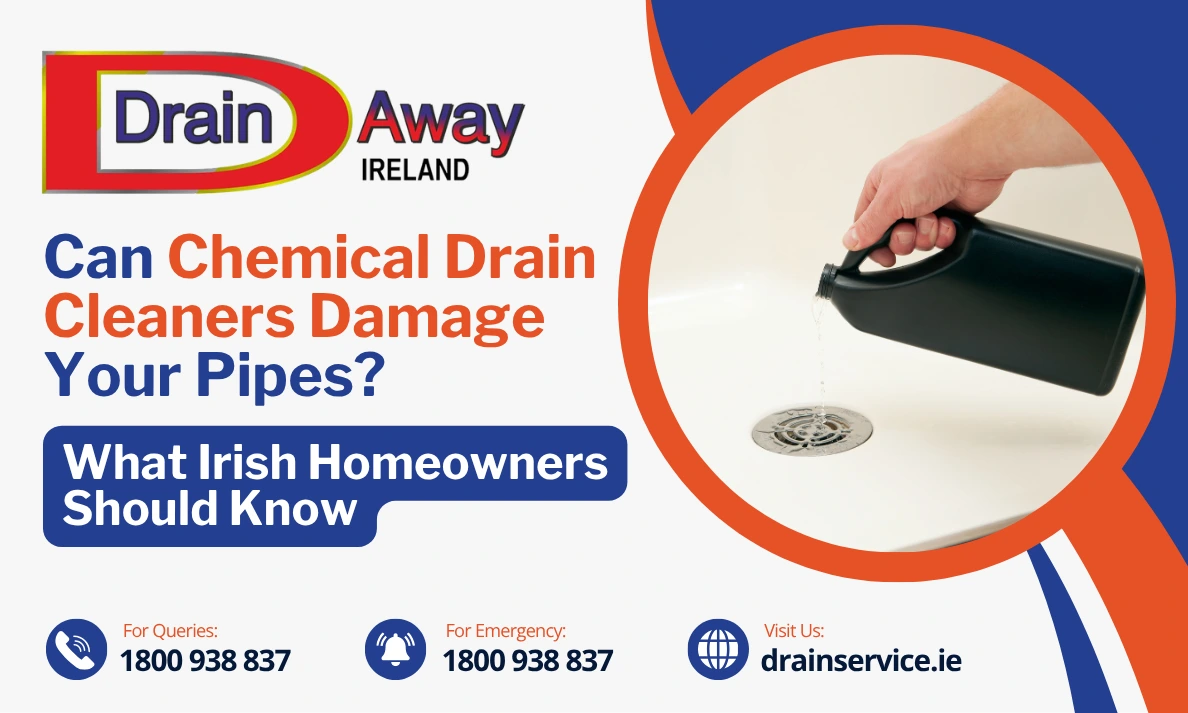
Chemical drain cleaners can potentially damage certain types of pipes if they are used incorrectly or too often. However, the impact depends on the type of cleaner you use, the age of your plumbing system, the condition of your pipes, and the nature of the blockage.
Many homeowners reach for chemical drain cleaners when they notice a slow sink, a blocked shower, or standing water in a drain. These products are widely available and often marketed as a fast and inexpensive solution. In many cases, they appear to work quickly by helping dissolve clogs caused by hair, grease, soap scum, and other organic materials.
The problem is that not every blockage can be solved with chemicals. Some drainage issues are symptoms of larger problems hidden deeper within the plumbing system. Repeatedly pouring chemical drain cleaners into your pipes may temporarily improve drainage while allowing the underlying issue to become worse.
At Drain Away, technicians often encounter situations where homeowners have already tried multiple drain opening products before seeking professional assistance. In many of these cases, the blockage returns because the root cause was never properly identified.
If your drain keeps blocking despite using chemical drain cleaners, there may be an underlying issue that requires professional drain cleaning, drain unblocking, or a CCTV drain survey.
How Do Chemical Drain Cleaners Work?
Chemical drain cleaners are specially formulated products designed to dissolve clogs within pipes. They work through chemical reactions that break down materials causing the blockage.
Most products target common drain obstructions such as:
- Hair grease buildup
- Soap residue
- Food waste
- Organic debris
- Fat deposits
The goal is simple. The chemicals react with the blockage and help dissolve clogs so water can flow freely again.
Types of Chemical Drain Cleaners
There are several categories of drain cleaners available to homeowners.
Caustic Cleaners
Caustic cleaners often contain substances such as sodium hydroxide. These products generate heat through an exothermic reaction. The heat helps break down grease and organic matter inside the drain.
Oxidising Cleaners
Oxidising cleaners use chemicals that release oxygen. This process helps break down hair grease and food waste while generating heat that assists in dissolving the clog.
Acid-Based Cleaners
Some professional-grade products use strongly acidic compounds. These products are typically more powerful and should only be used according to manufacturer’s instructions because of potential health hazards and safety risks.
Do Chemical Drain Cleaners Always Damage Pipes?
It is important to avoid exaggerated claims. Chemical drain cleaners do not automatically destroy plumbing systems.
However, certain products may damage some pipe materials when used incorrectly or repeatedly. The risk increases when pipes are older, already damaged, poorly installed, or exposed to excessive heat generation from repeated chemical reactions.
This is why drainage professionals generally recommend identifying the cause of recurring clogged drains instead of relying on repeated chemical treatments.
Are Chemical Drain Cleaners Safe for Pipes?
Chemical drain cleaners are not necessarily unsafe. Their impact depends on several factors, including pipe material, pipe age, existing damage, usage frequency, and blockage type.
A product that works safely in one home may create problems in another.
Understanding your plumbing system is essential before deciding whether chemical cleaners are the best solution.
PVC Pipes
PVC pipes are commonly used in modern Irish homes because they resist corrosion and generally handle household drainage effectively.
PVC systems are usually more resistant to chemical exposure than older metal pipes. However, this does not mean unlimited use is risk-free.
Repeated exposure to harsh drain cleaning chemicals may gradually affect pipe joints and seals. Excessive heat generated during chemical reactions may also place additional stress on connections within the plumbing system.
Older Metal Pipes
Older homes throughout Ireland often contain metal drainage systems.
These pipes may be significantly more vulnerable to chemical damage. Corrosion can weaken the pipe interior over time. When chemical drain cleaners generate heat or introduce highly reactive compounds into the system, deterioration may accelerate.
If your property was built decades ago and still contains original drainage infrastructure, caution is advisable before using aggressive drain cleaning chemicals.
Already Damaged Pipes
If your drainage system already contains cracks, corrosion, displaced joints, or structural weaknesses, chemical cleaners may contribute to further deterioration.
The cleaner itself may not be the original cause of the problem. However, repeated exposure can worsen existing conditions and increase the likelihood of leaks or drainage failures.
This is one reason why professional drain inspection services have become increasingly important. Modern CCTV drain surveys allow drainage specialists to inspect internal pipe conditions without excavation.
Signs Chemical Drain Cleaners May Be Damaging Your Drain System
Most homeowners do not realise there is a problem until drainage performance starts getting worse. Several warning signs may indicate that your plumbing system requires professional attention.
Recurring Blockages
If you keep using drain cleaners and the blockage continues to return, the issue may be deeper than a simple clog.
Recurring blocked drains often indicate grease accumulation, structural defects, tree roots, or partial pipe collapse rather than surface debris.
Slow Draining Sinks
A sink that drains slowly after multiple chemical treatments may suggest that the obstruction has not been completely removed.
The blockage may simply be reforming around residual material still trapped inside the pipe.
Bad Odours
Persistent smells coming from drains often indicate trapped waste, bacterial growth, grease buildup, or standing water inside damaged sections of the drainage system.
Chemical cleaners may temporarily mask the smell without eliminating the source.
Gurgling Sounds
Unusual noises from sinks, toilets, or showers may indicate restricted airflow within the drainage system.
These sounds can occur when blockages interfere with normal water movement.
Leaks Around Pipes
Moisture around pipe joints should never be ignored.
Leaks may indicate pipe deterioration, damaged seals, or structural weaknesses that require investigation.
Multiple Drains Blocking Together
When several drains begin showing symptoms simultaneously, the problem often extends beyond a single fixture.
This situation may involve the main drainage line and usually requires professional drain cleaning or drain unblocking services.
Recurring blockages often indicate a deeper drainage issue. Identifying the root cause early can prevent costly repairs and reduce the risk of serious drainage failures later.
Professional inspections can reveal problems that chemical cleaners cannot fix.
Why Chemical Drain Cleaners Sometimes Fail to Solve the Problem
Chemical drain cleaners can help dissolve clogs caused by hair grease, soap residue, and small amounts of organic waste. However, they cannot solve every drainage problem. If you keep using chemical drain cleaners and the blockage returns, there is usually a deeper reason.
Tree Roots
Tree roots are one of the most common causes of recurring clogged drains in Ireland. Roots naturally seek moisture and can enter small cracks in underground pipes. Once inside, they continue growing and restrict water flow.
Chemical drain cleaners cannot remove established root intrusions. Professional drain cleaning equipment or specialised root cutting tools are usually required.
Read More: Tree Roots in Drains: How They Damage Pipes in Ireland’s Old Properties
Collapsed Pipes
If part of a drain has collapsed, no amount of chemical treatment will restore normal flow. Water and waste will continue collecting around the damaged section.
At Drain Away, CCTV drain surveys frequently reveal hidden pipe collapses that homeowners initially mistake for ordinary blockages.
Large Grease Build-Ups
Kitchen drains often accumulate years of grease deposits. While chemical products may remove a small portion of the buildup, they often fail to clear thick accumulations attached to pipe walls.
This is why some homeowners experience temporary improvement followed by another blockage a few weeks later.
Foreign Objects
Items such as wipes, sanitary products, children’s toys, and excessive paper can become trapped inside drains.
Chemical cleaners cannot dissolve many of these materials effectively.
Structural Defects
Poor pipe installation, displaced joints, and incorrect drainage gradients can all contribute to ongoing drainage problems.
These issues require identification and repair rather than repeated chemical treatments.
Deep Blockages
Some blockages occur many metres away from the affected fixture. In these situations, the cleaner may never reach the obstruction in sufficient concentration to be effective.
This is where CCTV drain surveys provide significant value. A professional inspection allows technicians to see exactly what is happening inside the drainage network rather than relying on guesswork.
Risks of Using Chemical Drain Cleaners Frequently
Chemical drain cleaners can be useful in certain situations. However, repeated use may create additional concerns for homeowners.
The key point is balance. Occasional use is different from repeatedly relying on chemicals every time your drain slows down.
Potential Pipe Damage
Frequent use can expose your plumbing system to repeated chemical reactions and heat generation.
Over time, this may contribute to deterioration in vulnerable pipes, particularly older metal systems or pipes that already contain defects.
This does not mean chemical drain cleaners always cause damage. It means they can pose risks if used frequently or contrary to product instructions.
Exposure to Harmful Fumes
Some chemical drain cleaners release fumes during use.
Poorly ventilated bathrooms, utility rooms, and kitchens may allow these fumes to accumulate. Certain people may experience irritation if exposed for prolonged periods.
Following health and safety instructions is essential whenever using drain cleaning chemicals.
Skin and Eye Irritation
Many drain cleaners contain highly reactive ingredients.
Accidental splashes can cause irritation or injury to skin and eyes. This is why manufacturers recommend gloves, protective eyewear, and careful handling.
Professional plumbers and drainage technicians also follow strict safety procedures when handling professional-grade products.
Environmental Concerns
Wastewater eventually enters broader treatment and disposal systems.
While approved products are designed for domestic use, excessive chemical usage may contribute to unnecessary environmental impacts over the long term.
Many homeowners today prefer prevention-focused drain maintenance strategies rather than frequent chemical treatments.
Increased Repair Costs
One of the biggest risks is financial.
If chemical cleaners repeatedly mask an underlying issue, the actual problem may continue developing unnoticed. What begins as a simple blockage could eventually require more extensive repairs.
Industry experience consistently shows that early diagnosis is usually less expensive than waiting until a drainage failure occurs.
Safer Alternatives to Chemical Drain Cleaners
If you are concerned about using chemical drain cleaners, there are several alternative approaches worth considering.
These methods may help reduce blockages while placing less stress on your plumbing system.
Hot Water Flushing
For minor grease accumulations, flushing drains with hot water can sometimes help maintain flow.
This is particularly useful in kitchen sinks where small amounts of grease may begin accumulating inside pipes.
However, hot water alone will not remove severe blockages.
Drain Strainer Usage
One of the simplest preventative measures is using drain strainers.
These inexpensive devices help catch hair, food particles, and debris before they enter the drainage system.
Preventing a blockage is almost always easier than removing one.
Regular Drain Maintenance
Routine drain maintenance is one of the most effective long term strategies.
Scheduled cleaning can help remove developing deposits before they become serious obstructions.
Many commercial properties throughout Ireland already follow preventative maintenance schedules because they understand the cost savings associated with avoiding emergency callouts.
Professional Drain Cleaning
Professional drain cleaning offers a more comprehensive solution than simply pouring chemicals into a drain.
Specialised equipment can remove grease buildup, debris, and obstructions more effectively while allowing technicians to assess the overall condition of the plumbing system.
This approach addresses the cause of the blockage rather than only the symptom.
Read More: How Professional Drain Cleaning Improves Drain Flow
CCTV Drain Inspection for Recurring Problems
If the same drain continues blocking, a CCTV drain inspection is often the smartest next step.
Modern camera systems provide real-time images from inside the drain. This helps identify:
- Tree roots
- Pipe cracks
- Structural defects
- Grease accumulation
- Foreign objects
- Collapsed sections
Instead of guessing why the blockage keeps returning, you receive clear evidence of the actual problem.
If the same blockage keeps returning, identifying the root cause is usually more effective than repeatedly using chemical drain cleaners. Professional drain cleaning and CCTV drain surveys can often save time, money, and frustration by providing a permanent solution.
Read More: CCTV Drain Survey vs. Traditional Drain Inspection: Which is Better?
Call Professionals at Drain Away
If you have used chemical drain cleaners multiple times and your drain is still causing problems, it may be time for professional help. Drain Away provides drain cleaning, drain unblocking, drain maintenance, and CCTV drain survey services across Ireland. Our experienced team can identify hidden drainage issues and recommend the most effective solution for your property before a small blockage becomes a major repair.
Conclusion
Chemical drain cleaners may provide a quick solution for minor clogged drains, but they are not suitable for every drainage problem. While they can help dissolve clogs caused by hair grease and organic waste, they cannot remove tree roots, collapsed pipes, structural defects, or many deep blockages.
The safety of chemical drain cleaners depends on your pipe material, pipe condition, and frequency of use. Repeated exposure may increase the risk of deterioration in older or already damaged plumbing systems.
If your drain keeps blocking despite using chemical drain cleaners, the issue is often deeper than it appears. Professional drain cleaning, drain maintenance, or a CCTV drain survey can identify the root cause and help prevent future drainage problems.
Frequently Asked Questions
Q. Are chemical drain cleaners safe for PVC pipes?
Some chemical drain cleaners may be compatible with PVC pipes when used according to instructions. However, repeated use should generally be avoided because ongoing exposure may place unnecessary stress on joints and fittings.
Q. Can chemical drain cleaners damage old pipes?
Yes. Older metal pipes are often more vulnerable to corrosion and deterioration. Repeated exposure to chemical reactions and heat generation may increase the risk of damage over time.
Read More: Does Bleach Unblock Shower Drains or Should You Call a Pro?
Q. Why does my drain keep blocking after using drain cleaner?
The blockage may have an underlying cause such as grease buildup, tree roots, structural defects, foreign objects, or pipe damage. Chemical cleaners may temporarily improve flow without solving the actual problem.
Q. Are chemical drain cleaners better than professional drain cleaning?
Not usually. Chemical cleaners can help with minor blockages. Professional drain cleaning can identify and remove deeper obstructions while assessing the overall condition of your drainage system.
Q. Can baking soda and vinegar replace chemical drain cleaners?
Baking soda and vinegar may help with minor odours and light residue buildup. However, they are generally ineffective against severe blockages, tree roots, or major grease accumulations.
Q. What are drain snakes and when are they used?
Drain snakes are mechanical tools designed to break through or remove obstructions inside pipes. They are commonly used by professional plumbers and drainage specialists when physical removal is more effective than chemical treatments.
Q. When should I stop using drain cleaners and call a professional?
If blockages keep returning, multiple drains are affected, bad smells persist, or water drains slowly despite treatment, professional assessment is usually the best next step. A CCTV drain survey can often reveal the exact cause of the problem.