
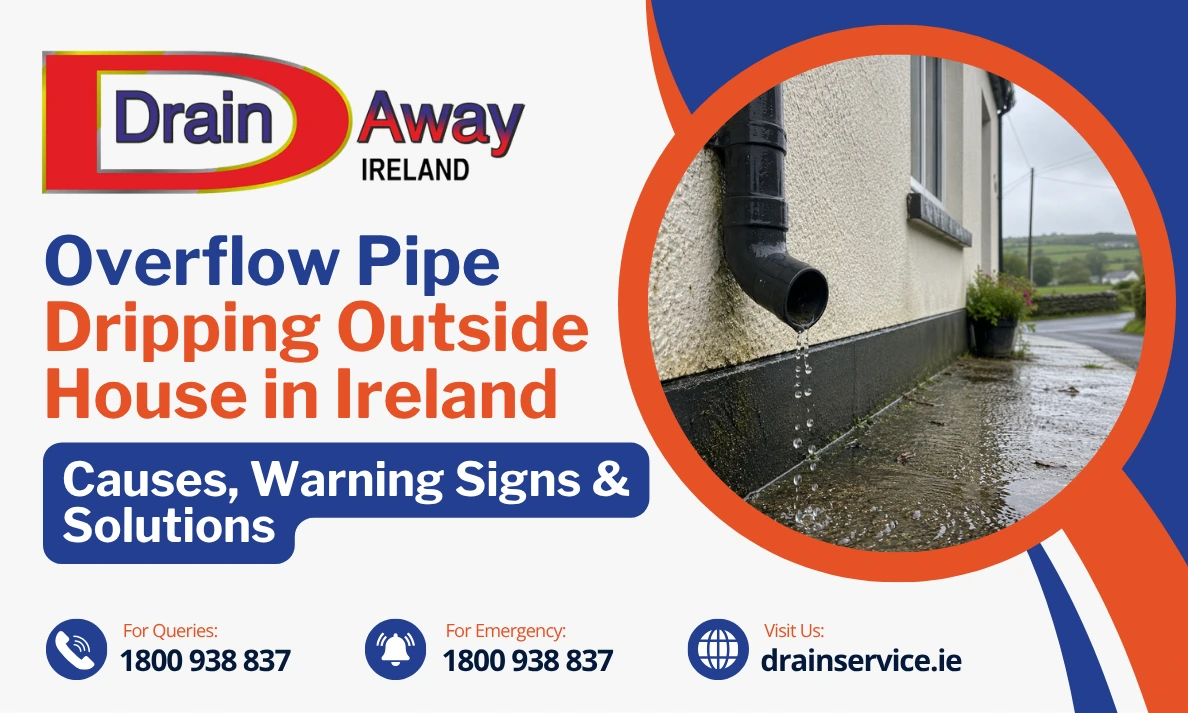
If your overflow pipe is dripping outside your house, then it should not be ignored. In some cases, occasional dripping may be harmless. However, continuous water discharge can indicate septic tank overflow, wastewater drainage problems, a blocked drain pipe, or an early drainage system failure.
The overflow pipe is often the first visible warning sign that something is wrong underground. Understanding the possible causes can help you make an informed decision before a small issue develops into a costly repair.
What Is an Overflow Pipe?
An overflow pipe is a safety outlet designed to release excess water or wastewater when part of a system cannot operate normally.
You may find overflow pipes connected to:
- Water storage tanks
- Septic tanks
- Wastewater treatment systems
- Pump chambers
- Drainage systems
Their purpose is simple. They prevent pressure build-up and allow excess liquid to escape before damage occurs.
When an overflow pipe begins dripping continuously, it is often a sign that another component within the system is struggling to cope with normal wastewater movement.
In Ireland, overflow pipe problems are commonly linked to septic tank drainage issues, blocked outlets, percolation area problems, or wastewater overload after periods of heavy rainfall.
Why Is My Overflow Pipe Dripping Outside the House?
Reason 1: Your Septic Tank May Be Full
One of the most common reasons for an outside overflow pipe dripping is a full septic tank.
As wastewater enters the tank daily, solids settle at the bottom while liquid flows onward through the treatment process. Over time, sludge levels increase. Without regular septic tank emptying, the system eventually loses storage capacity.
Common septic tank full signs include:
- Slow flushing toilets
- Slow-draining sinks
- Bad smells around the property
- Wastewater overflow
- Standing water near septic tank areas
- Overflow pipe discharge
Many homeowners first notice a septic tank overflow through water dripping from an external pipe before they experience indoor drainage issues.
If the tank has not been serviced recently, a septic tank inspection may be necessary to determine whether septic tank emptying or a septic tank pump out is required.
Read More: When To Empty Septic Tank
Reason 2: Heavy Rain Has Saturated the Percolation Area
Ireland’s climate plays a significant role in wastewater drainage performance.
During prolonged periods of heavy rainfall, groundwater levels can rise substantially. When this happens, the percolation area may become saturated and unable to absorb treated wastewater efficiently.
The result can include:
- Wastewater drainage problems
- Overflow pipe discharge
- Wet patch in garden areas
- Standing water near septic tank systems
- Drain field failure symptoms
Even a properly maintained septic system can experience temporary pressure during exceptionally wet weather conditions.
If your overflow pipe starts dripping after significant rainfall, the percolation area may need professional assessment.
Blocked Drainage Pipes
A blocked drain pipe can prevent wastewater from flowing correctly through the system.
Over time, drainage systems collect:
- Grease deposits
- Food particles
- Organic debris
- Mineral build-up
- Tree roots
As restrictions increase, wastewater may struggle to move through underground pipework. Pressure can build within the system and eventually force water toward overflow points.
Common signs associated with a drain blockage include:
- Slow-draining fixtures
- Gurgling drains
- Recurring blockages
- Outdoor drain problems
- Overflow pipe dripping
Professional drainage inspection and drain unblocking services help identify and remove restrictions before major wastewater overflow occurs.
Reason 3: Damaged or Cracked Pipes
Not every overflow pipe problem is caused by a blockage.
Underground drainage systems can deteriorate over time due to:
- Ground movement
- Tree root intrusion
- Pipe ageing
- Joint separation
- Structural damage
Cracked pipes may allow groundwater infiltration while also disrupting normal wastewater flow.
Many homeowners are unaware of underground damage until symptoms appear above ground, such as:
- Overflow pipe discharge
- Wet garden areas
- Repeated drainage issues
- Unexpected wastewater overflow
A professional CCTV drain survey can help identify hidden defects without unnecessary excavation.
Reason 4: Faulty Pump or Septic System Component
Some modern wastewater systems rely on pumps and control equipment to move wastewater efficiently.
When these components fail, wastewater may not be transported correctly through the system.
Common mechanical faults include:
- Pump failure
- Float switch failure
- Alarm activation
- Electrical component issues
- Control panel faults
In these situations, overflow pipe dripping may occur alongside other warning signs.
Many systems are designed to trigger alarms when abnormal water levels are detected. If you notice an overflow pipe leaking together with a septic alarm, a professional assessment should be arranged promptly.
Read More: Septic Tank Alarm Goes Off in Ireland
Warning Signs You Should Not Ignore
An overflow pipe problem rarely occurs in isolation.
The following warning signs often indicate larger septic tank drainage issues or wastewater drainage problems developing within the property.
Watch for:
- Constant dripping from the overflow pipe
- Foul smell outside the house
- Slow-draining sinks and showers
- Gurgling drains
- Wet patch in the garden
- Standing water near septic tank areas
- Sewage backup signs
- Overflowing gullies
- Outdoor drain problems
- Septic alarm activation
- Repeated toilet drainage issues
- Visible wastewater overflow
If several of these symptoms occur together, professional drainage inspection is recommended.
Many drainage system failures begin with small warning signs that gradually worsen over time.
Can a Dripping Overflow Pipe Be a Sign of Septic Tank Failure?
Yes.
A continuously dripping overflow pipe can be one of the earliest indicators of septic system failure.
The exact cause varies, but three common scenarios account for most cases.
Overflow Pipe + Full Tank
When a septic tank reaches capacity, wastewater movement becomes restricted.
As liquid levels rise, excess wastewater may begin escaping through overflow points. This often occurs before a complete system backup develops.
This is why septic tank full signs should never be ignored.
Overflow Pipe + Failed Percolation Area
A drain field failure prevents treated wastewater from dispersing correctly into the surrounding soil.
As wastewater accumulates, pressure within the system increases.
The overflow pipe may become the first visible outlet for excess liquid, particularly after periods of prolonged rainfall.
Overflow Pipe + Blocked Outlet
A blocked outlet pipe can create a bottleneck within the drainage system.
Wastewater entering the tank cannot leave efficiently. As liquid levels rise, overflow discharge may begin even though the septic tank itself is not completely full.
This is why a professional drainage inspection is often necessary to identify the true source of the problem.
Many homeowners assume the tank needs emptying when the actual issue lies elsewhere within the drainage system.
When Should You Call a Professional?
You should arrange a professional assessment when:
- Dripping continues beyond 24 to 48 hours
- Bad smells begin to develop
- Water is pooling near the tank
- Multiple drains become slow
- Septic alarms activate
- You notice wastewater overflow
- Drainage problems keep returning
- A wet patch in the garden continues growing
The earlier the problem is identified, the easier it is usually to resolve.
Waiting until a complete drainage system failure occurs often increases repair complexity and cost.
How Drain Away Diagnoses Overflow Pipe Problems
When your overflow pipe keeps dripping, the most important step is identifying the actual cause rather than guessing. In our experience across Ireland, many homeowners initially assume they need a septic tank pump out, only to discover the issue is actually a blocked drain pipe, percolation area problems, or a damaged underground drain.
A professional drainage inspection helps identify the source of the problem before unnecessary work is carried out.
Septic Tank Inspection
A septic tank inspection is often the first step when investigating septic tank overflow or wastewater overflow issues.
During an inspection, professionals typically assess:
- Tank liquid levels
- Sludge accumulation
- Signs of septic tank leaking
- Outlet pipe performance
- Internal wastewater movement
- Signs of septic tank drainage issues
This helps determine whether the system is functioning normally or whether further action is needed.
Septic Tank Emptying
If a tank has reached capacity, septic tank emptying may be required.
Many septic tank full signs develop gradually and include:
- Overflow pipe dripping
- Slow-draining fixtures
- Standing water near septic tank areas
- Foul smell outside the house
- Wastewater is backing up into drains
Removing accumulated sludge restores storage capacity and allows the system to operate more efficiently.
CCTV Drain Survey
A CCTV Drain Survey allows underground drainage systems to be inspected without excavation.
A specialist camera is inserted into the drainage network to identify:
- Drain blockage locations
- Cracked pipes
- Root intrusion
- Collapsed pipe sections
- Structural drainage defects
This is often the fastest way to identify hidden wastewater drainage problems that are contributing to overflow pipe discharge.
Drain Inspection
A complete drainage inspection looks at the wider drainage system rather than focusing only on the septic tank.
This helps identify:
- Outdoor drain problems
- Blocked drain pipe sections
- Surface water issues
- Wastewater flow restrictions
- Signs of drainage system failure
Many properties have multiple contributing factors, making a full system assessment valuable.
Percolation System Assessment
The percolation area plays a critical role in wastewater treatment.
If the soil can no longer absorb treated wastewater effectively, symptoms may include:
- Septic tank overflow
- Wet patch in the garden
- Drain field failure
- Wastewater pooling
- Overflow pipe discharge
A professional assessment helps determine whether the issue is temporary due to weather conditions or a sign of a larger drainage problem.
Why Acting Early Can Save Significant Repair Costs
One important observation from years of working with Irish drainage systems is that overflow pipe problems rarely improve on their own.
Small issues often become larger issues when left unresolved.
For example:
- A minor drain blockage can develop into a complete wastewater backup.
- A saturated percolation area can eventually lead to wastewater overflow.
- A damaged pipe can deteriorate further and affect the surrounding drainage infrastructure.
- A full septic tank can create wider septic tank drainage issues throughout the property.
The earlier you investigate the cause, the easier and often less expensive the solution becomes.
This is particularly important because water damage and wastewater contamination can affect gardens, driveways, and surrounding property areas if the problem continues for an extended period.
What Many Homeowners Get Wrong About Overflow Pipes
One common misconception is that a dripping overflow pipe automatically means the septic tank needs emptying.
Sometimes that is true.
However, professional drainage inspection often reveals other causes such as:
- Drain blockage
- Tree root intrusion
- Percolation area problems
- Drain field failure
- Damaged pipework
- Mechanical component failure
This is why proper diagnosis is more important than assumptions.
A successful solution depends on identifying the actual cause rather than treating only the visible symptom.
Conclusion
A dripping overflow pipe outside your house should never be ignored if it continues for more than a short period. While some situations may be temporary, ongoing discharge often points to septic tank overflow, wastewater drainage problems, a blocked drain pipe, percolation area problems, or developing drainage system failure.
The most important thing is understanding that the overflow pipe itself is usually not the problem. It is a warning sign that another part of the system may need attention.
Call Professionals at Drain Away
If your overflow pipe has been dripping continuously, you notice a foul smell outside the house, standing water near septic tank areas, or signs of wastewater overflow, a professional assessment can help identify the problem before it worsens.
At Drain Away, our team investigates septic tank drainage issues, blocked drain pipe problems, outdoor drain problems, and drainage system failure using septic tank inspection, septic tank emptying, CCTV surveys, and drainage inspection services across Ireland.
Frequently Asked Questions
Q. Why is water dripping from an overflow pipe outside?
A dripping overflow pipe usually indicates excess water or wastewater within the system caused by septic tank overflow, drainage restrictions, heavy rainfall, or mechanical faults affecting normal wastewater movement.
Q. Can a full septic tank cause an overflow pipe to leak?
Yes. A full septic tank is one of the most common causes of overflow pipe discharge. Rising liquid levels can force wastewater toward overflow outlets Q. when storage capacity becomes limited.
Q. Is an overflowing pipe an emergency?
It can be. If the overflow is accompanied by sewage backup signs, strong odours, wastewater overflow, or standing water near septic tank areas, a professional assessment should be arranged promptly.
Q. How much does septic tank emptying cost in Ireland?
Costs vary depending on tank size, location, accessibility, and service requirements. A septic tank inspection can determine whether emptying is required before any work is carried out.
Read More: How Much Does Septic Tank Emptying Cost in Ireland?
Q. Can heavy rain cause overflow pipe problems?
Yes. Heavy rainfall can saturate percolation areas, raise groundwater levels, and reduce the soil’s ability to absorb treated wastewater. This can contribute to overflow pipe discharge and temporary wastewater drainage problems.